

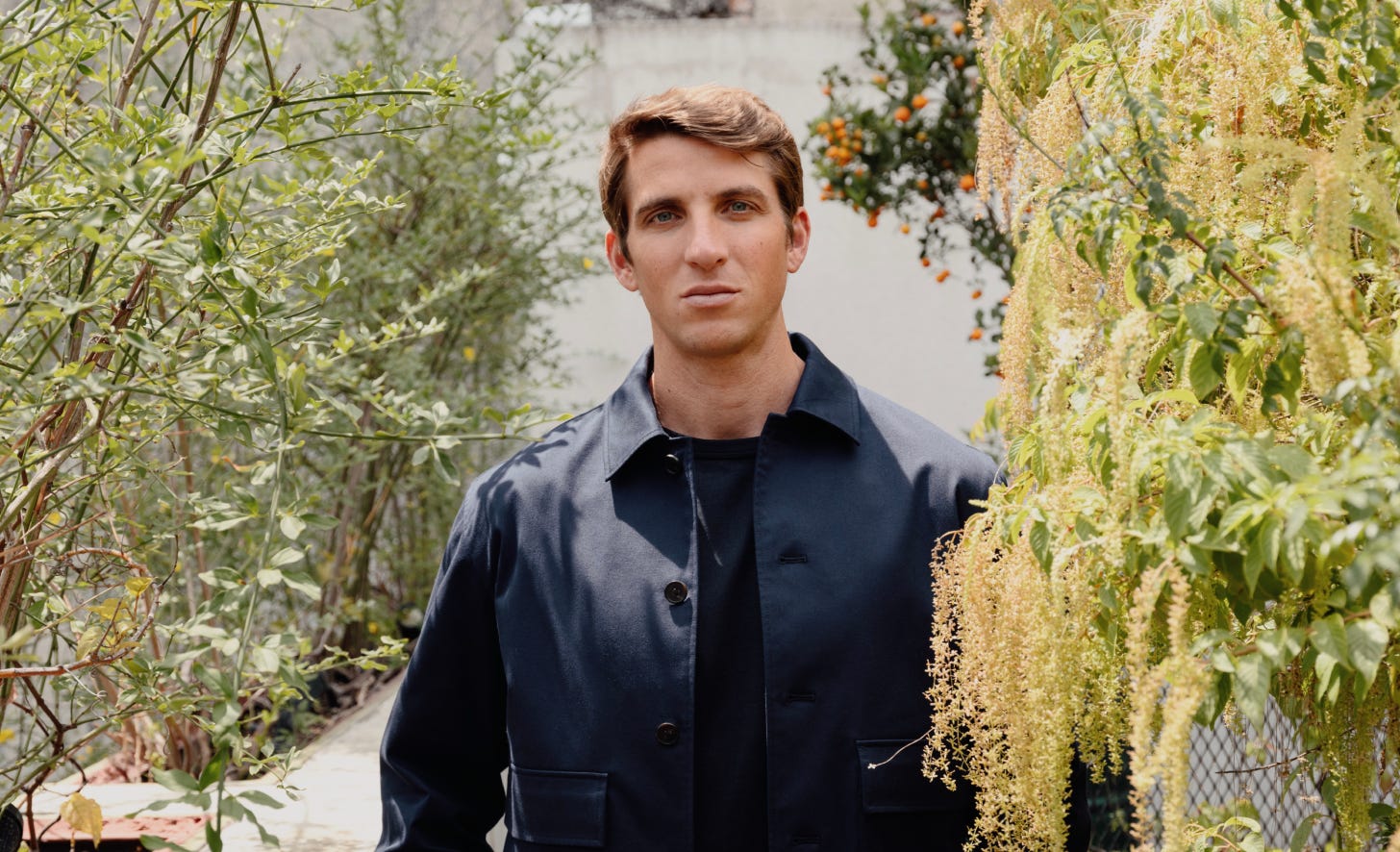
Brett Hagler is dreaming of a new house.
Blooming plants greet you on the stoop, where the red tile roof points to a gentle peak. Sunlight beams through tall glass doors into the living room and across the warm-wood kitchen.
Out front, sidewalks stretch on both sides of the street, dotted with kids playing soccer and neighbors strolling into town.
It’s a house worth saving for. Even better, it’s a place worth calling home.

Hagler knows what it’ll take to get there. He’s calculated construction costs and timelines. He’s researched the municipal hurdles around titling and utilities. He’s added up the mortgage estimates and financing fees. This is a life-changing investment.
Only it’s not for him. This is Hagler’s dream for thousands of working-class families stuck in Mexico’s housing crisis, who have never had more buying power or fewer opportunities to buy.
Hagler’s new company, Hometown Equity, launches this month. They aim to build the kind of development the region has never seen done right: entire towns designed for the middle class. It’s a bet that housing can be fairly priced, beautiful, and profitable at once.
If it works, families will feel the difference for generations.
Hagler understands what a good home means to a family. As co-founder of the housing nonprofit New Story, he saw the cascading impact of homeownership in real time. He recalls a grandmother in El Salvador whose home made it possible for her daughter to go to college, secure a corporate job with benefits, and start her own family from a position of stability.
“I became more and more convicted in the power of what a home can do,” Hagler said.
It’s a conviction he shares with his Hometown co-founder, Enrique Mezo Herrera, an entrepreneur with a background in Mexican housing and finance who previously served as managing director of investments at New Story.
“For many families, buying a home is not only the biggest purchase in their life,” Herrera said. “It will be the cornerstone of social mobility for them and for generations to come.”
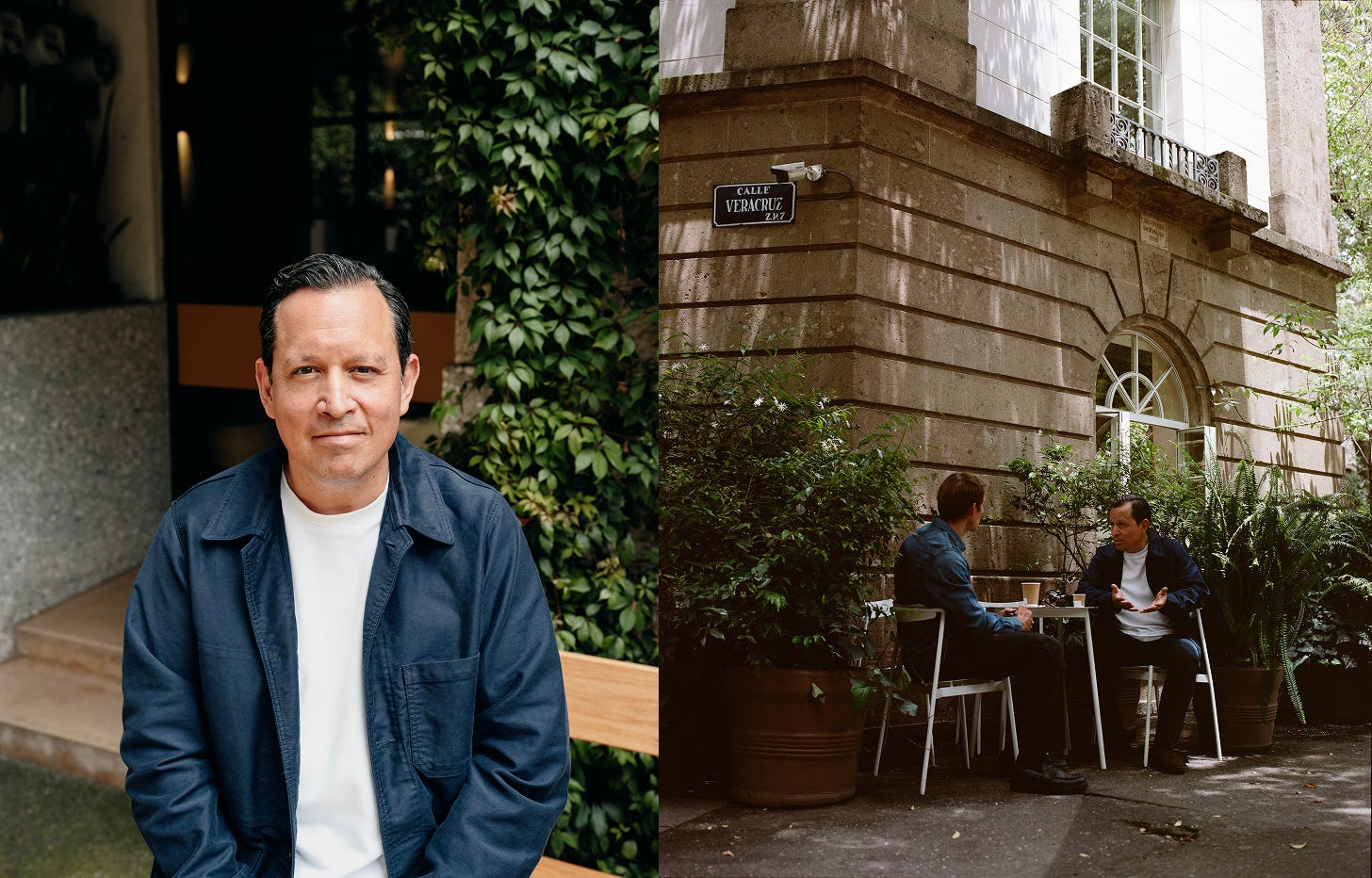
While others in development focus on healthcare, education, jobs, and justice, Hagler and Herrera are inspired by the transformative power of real estate. Housing, they believe, is what advances families from cycles of poverty to security and social mobility. And hometowns can do that at scale, for hundreds of families and the economies around them. Their goal is 100 hometowns in the next decade, starting with four in the next year.
“I’ve felt called to this hardworking, emerging middle class,” Hagler said. “A lot of charities and churches overlook this demographic because they’re not the poorest, but they’re struggling.”
In Mexico, the middle class is booming, adding 12 million people in the past several years. For the first time, the country’s middle class outnumbers those in poverty. But even with their steady paychecks, these families have been left out of the housing market.
The government moved away from subsidizing real estate developers building affordable housing years ago; private builders now rely on high-dollar urban projects rather than venturing to smaller markets. That leaves the smaller cities where these families live and work with almost no new homes.
“We have had a chance to go across Mexico, across different regions, multiple municipalities, different economic realities, and they all share something,” Herrera said. “There is no one building houses.” New home registrations have dropped by more than half in the past decade, and local efforts to build informally are “insufficient,” he said.
The path to homeownership is long, fragmented, and paved with concrete blocks.
For many small-town buyers, it starts with saving up to buy a plot, sometimes without a legal title, and hiring local masons to build one room at a time. The process takes years. Families live in overcrowded homes with relatives or pay rent on top of funding their build. In the end, they may need high-interest microloans to finish the job. They wait and wait only to end up in lower-quality houses they overpaid for.
Hagler saw a better, simpler path. With Hometown, he envisioned places where the working class could finally put down roots and thrive. That would take more than just a house key. The company had to own the whole process, from titled lots, home builds, and mortgages to neighborhood development.
“It’s way more than the house,” he said. “The house is critical and central, but it’s everything else around it that really shapes how you feel about where you live.”
Not just a home, but a hometown.

Hagler has called a lot of places home. His childhood home in Coral Springs, Florida. His fraternity house at Florida State University. His first place as a young founder in Atlanta, where he met the Christian investor who made him want to go back to church.
From there, he focused his entrepreneurial ambition on making an impact. Hagler began taking mission trips to Haiti and El Salvador. The idea of home felt completely different after he met families huddled in tents with dirt floors or one-room buildings. They were missing even the most basic markers of home. No privacy, no electricity, no clean water, no safety.
“Housing is so much the foundation of how we live our daily life, and it’s easy to take for granted,” Hagler said. “When you don’t have a stable or safe home, it takes away from the big and small moments of life: having dinner with your family, having privacy to study for school, being able to actually sleep at night.”
Hagler began New Story in 2014, and over 12 years as CEO, the organization helped more than 5,000 households secure better places to live. A fresh-faced founder in his mid-20s, Hagler dreamt big and acted boldly. When his nonprofit startup went through Y Combinator in 2015, they crowdfunded 100 homes in 100 days. In 2017, New Story joined the Praxis Accelerator.
“For the right founder, with the right posture, what young and inexperienced translates into is humility and optimism,” said Praxis Co-Founder & CEO Dave Blanchard. Hagler, now 37, “has been able to parlay his learning and confidence and optimism into bigger and bigger challenges.”
A Praxis connection led to New Story’s collaboration with ICON to become the first to 3D print homes for families in poverty, and the org earned Fast Company’s “most innovative” designation four times. The real shift came as the nonprofit adapted their model from philanthropy to market-based solutions to give families access to land and financing.
New Story began financing a local developer to build new communities for these families. In Ahualulco de Mercado, a Mexican town where only 39 affordable homes had sold in the previous five years, the partnership helped 340 families secure land titles and went on to start over 2,300 housing lots.
Along the way, Hagler kept meeting a different kind of family—teachers, drivers, and shopkeepers who saved to buy land and build but had no options where they lived and worked. So he did something he never planned: He left the growing, impactful nonprofit he co-founded and decided to launch something new.

Praxis has partnered with hundreds of founders building ventures in response to major societal issues, and Blanchard has seen many through similar transitions. The longer founders work on one problem, the more they find to work on, and the more willing they are to take a risk and start again.
Hagler, who returned to Praxis as an entrepreneur in residence this year, had “described New Story as an R&D project around global shelter,” Blanchard said. “It is a sort of inevitability, from my perspective, that a market-based, for-profit solution is an opportunity for Brett to step into, as a result of a lot of exploration that needed to be done through philanthropy.”
With Hometown, the company handles everything from titled land to finished homes and financing. Hagler thinks of the whole town as the product. Each master plan centers on a town square with amenities like a health clinic, childcare center, church, and cafes. At about 500 homes, each community is meant to be big enough to support local businesses and a sense of identity, and small enough to feel like home. The goal, Hagler said, is something “beautiful to the customer and beautiful to the town.”
The vision for Hometown is as exciting as it is unthinkable. Some people have told the founders they’re crazy. Why not build condos in Los Cabos or high-rises in Mexico City? “Of course, it would be easier doing condos and hotels and golf courses,” Herrera said.
Mexico’s small towns are used to getting exploited, receiving charity, or being overlooked for development entirely. Blanchard said challenges with corruption and law enforcement have at times kept outside capital away from the region. “It needs sacrificial leaders like Brett to step in and say, ‘I’m going to do this the right way,’” he said. “‘I’m going to bring values-oriented capital, and I’m going to come in with compassion and care, but also in a way that builds the economy.’”

Buyers start with a monthly payment plan for their lot, and that payment history and land ownership turn into credit and collateral for a future mortgage. For informal workers who haven’t opened a bank account or been able to secure loans before, this could become their first step into formal finance. The company’s leaders see a chance to serve as their trusted source of financial services, offering mortgages, small business loans, and insurance.
Hometown prioritizes customer trust and plans to be open about their finances, margins, and interest rates—nothing subsidized, but nothing unfair. “Everyone in Mexico knows someone that has been scammed in real estate,” Herrera said. “The developer never delivered on time, or the quality was bad, or the worst is, they truly never delivered.”
During a housing push in the 1990s and 2000s, large developers built huge subdivisions packed with cheap homes on the far outskirts of major cities, many financed through Infonavit, the national worker housing fund. Today at least 842,000 of those homes have gone unpaid, according to Spanish newspaper El País. Many were too far from jobs, and some were never connected to basic utilities. Families left, homes were stripped to concrete shells, and organized crime took hold in some abandoned developments.
“We are building houses, not cities, and that is one of the causes of the housing problem we face today,” UN-Habitat representative Fernanda Lonardoni told the paper.
Hometown is building differently. The company is targeting smaller cities of 20,000 to 150,000 people, on land within a short ride of existing jobs. Hagler brings experience working alongside municipalities, building the kind of trust with local leaders that many of those earlier developments never had. Herrera said mayors in the north told them, “Guys, you’re welcome. If you’re going to do this, we want to support you, because no one else is doing this.”
The incentives are different, too. The builders before them made their money from home sales, often backed by government loans and subsidies, and moved on. Hometown’s success depends on what happens after families move in. Residents who love where they live keep paying their mortgages, take out loans for a business or a second story, and can vouch for the company’s reputation as they grow into neighboring areas. What’s good for families is good for investors.

A Venn diagram on a slide deck from Hometown places their business in the middle of three circles: “Makes someone’s life better,” “Needed and undersupplied,” and “profitable.” Hagler repeats mantras like “capital and community” and “beauty matters.”
Herrera said the team has to resist imposing their own vision. “We’re going into towns in which we do not live, and we’re not part of their communities,” he said. “We need to be humble, and we need to make sure that what we’re doing is relevant for the people that are going to live there.”
The homes are meant to be desirable and lasting, not just affordable. “I think every human being appreciates design,” Hagler said. The Mexico City-based architecture firm Cuaik CDS developed master plans for the first homes, sharing Hometown’s commitment to “balancing architectural quality and affordability,” according to founder Santiago Cuaik.

For this market, the biggest draw, they found, is room to grow. Homes start small and are built to take a second or third story as a family’s income and needs expand, with “flexible spaces that adapt naturally as families grow,” Cuaik said.
The company is scouting their first hometown locations in the northern states of Coahuila and Chihuahua and central states of Hidalgo and Puebla, evaluating each for location, infrastructure, and local employment. These are regions tied closely to the US economy. “Agricultural products harvested in central Mexico, 18 or 24 hours after, are being presented in a Whole Foods in Manhattan,” Herrera said. Jobs have drawn workers from across the country, “and then there are no houses.”
Backed by a $6.5 million seed round, Hometown plans to break ground on its first communities in the year ahead, each with around 500 homes. Within two years, they aim to launch 10 hometowns and sell a combined 4,000 lots and homes.
The long-term goal goes beyond Mexico to 100 hometowns across Latin America in 10 years, alongside a thriving financial services business for the working class. It’s an ambitious plan for a team of a half-dozen, working out of their new office in Polanco, an upscale neighborhood in Mexico City.

Hagler has likened the business model to Walmart skipping urban centers to build in smaller communities. And former Walmart International CEO Kathryn McLay sees similar opportunities in their strategy.
“Hometown’s purpose to be a company that helps families create ownership, dignity, and long-term value distinguishes it from other organizations that extract a risk-factored premium from the underserved,” said McLay, an investor in the company. “Hometown’s ability to consider risk differently is transformative.”
The vertical integration model, which allows them to control quality and standards, also puts more of the risk back on the company. And the history of Mexican housing shows what’s at stake if they get it wrong.
“It’s not cheap, it’s capital intensive, it takes real risk to try, and you have to go through a lot to create something and make it happen,” Hagler said. “There’s so much that we’re going to do that’s stepping out in faith, trusting that God will bring the people and resources to make it happen.”
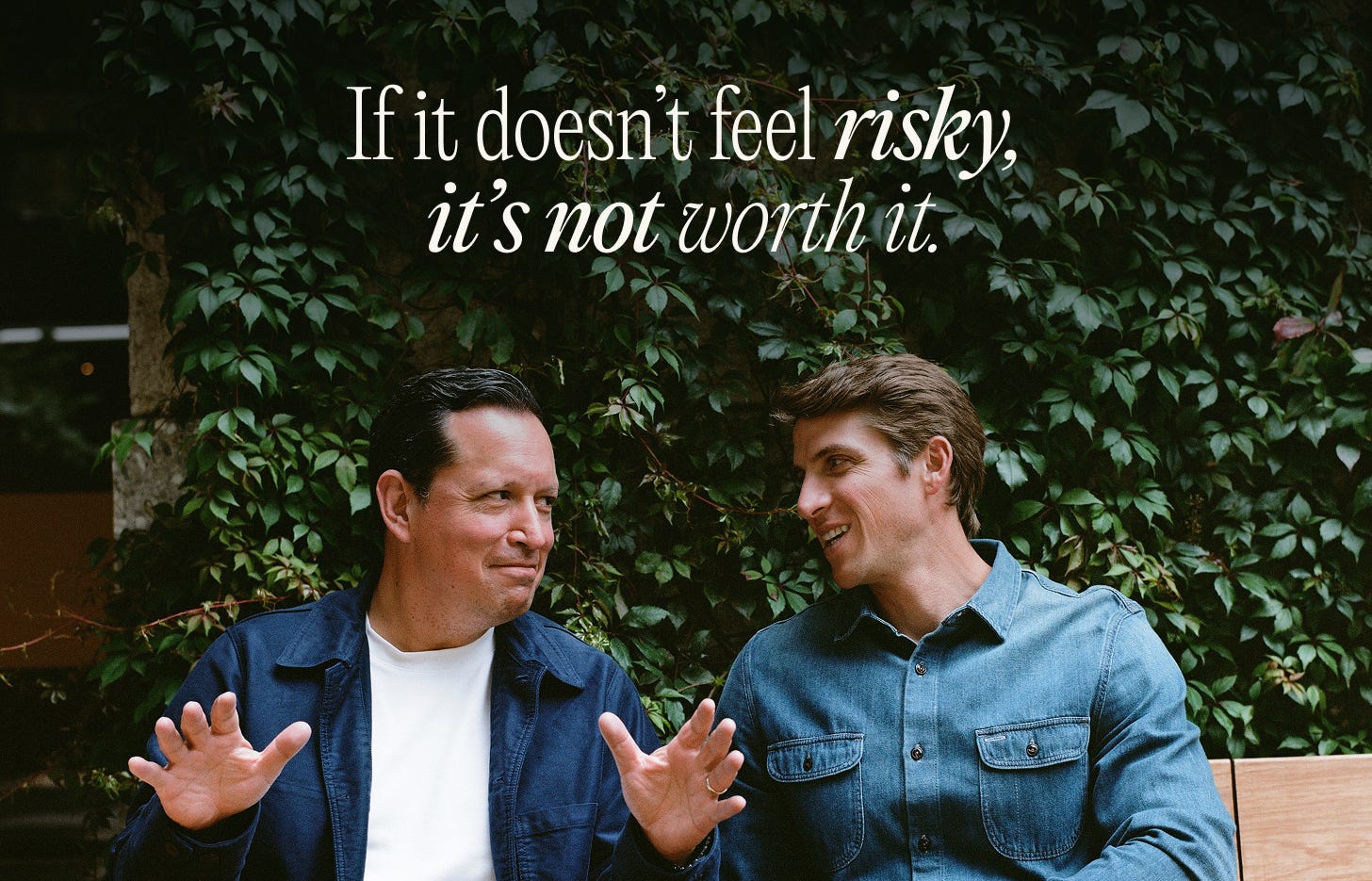
This is the attitude Hagler is known for. Ready to go big and try something new. Herrera said he’s the cautious one compared to his co-founder. “This is really difficult. This is precision work,” he said. “But at the same time, if it doesn’t feel risky or uncomfortable, then it’s not worth it.”
Photography by James Fitzgerald III for Praxis. Renderings by Cuaik CDS.
"Hometown’s ability to consider risk differently is transformative" - former Walmart CEO.
May Christians continue to grow this witness of building differently! Willing to take risk knowing we rely on God and owe it all to Him anyway.
This is a beautiful example of how building a community, both physically and relationally person-centered, is a what we need more of. I will be following along closely. Well done.