

Each year, Praxis Co-Founder & CEO Dave Blanchard delivers an update in the form of a Community Letter. The following essay is adapted from Dave’s 2024 address on using crises as a catalyst for quests.
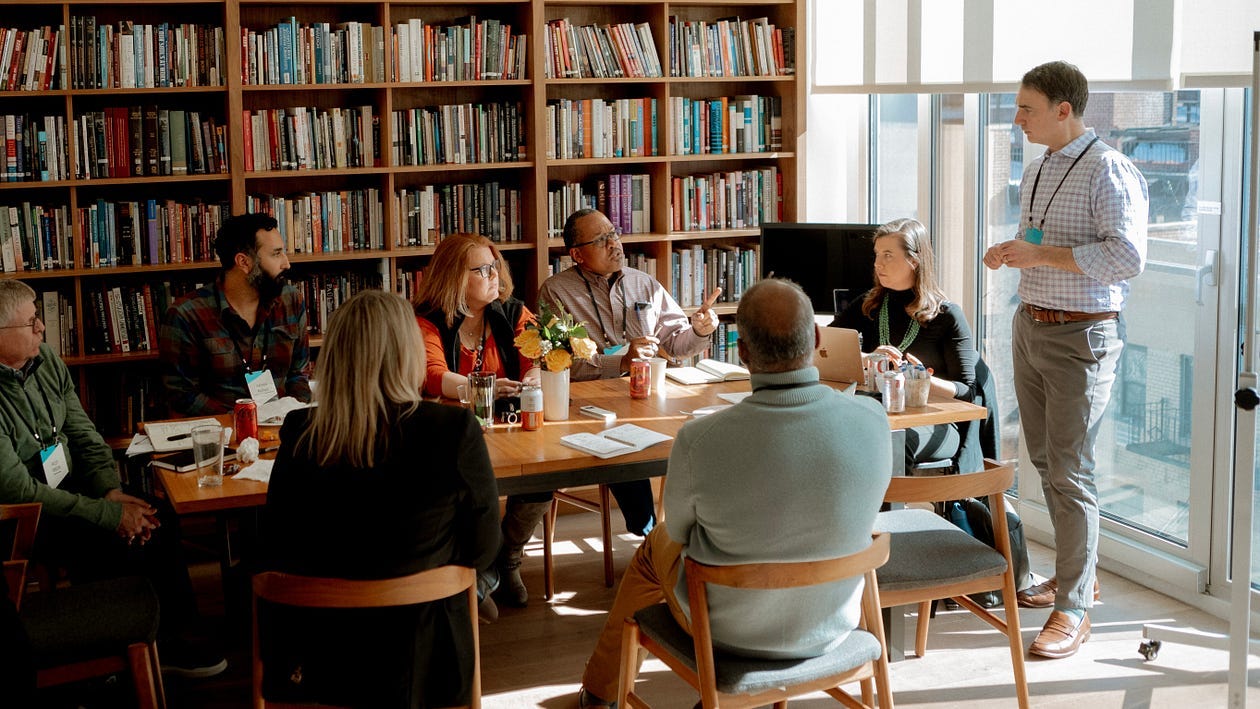
Last year’s Praxis Community Letter introduced the concept of redemptive quests. These are invitations to re-risk our God-given personal and organizational capacities on behalf of others, especially as we achieve success or favor that increases our “player level,” our ability to attract resources—for to whom much is given, much is required (Luke 12:48).
At Praxis, we continue to organize around our own redemptive quest to reawaken the Church’s creative and prophetic contribution on the major issues of our time, leaning on our list of Opportunities for Redemptive Imagination (ORIs) as a creative agenda for the our community.
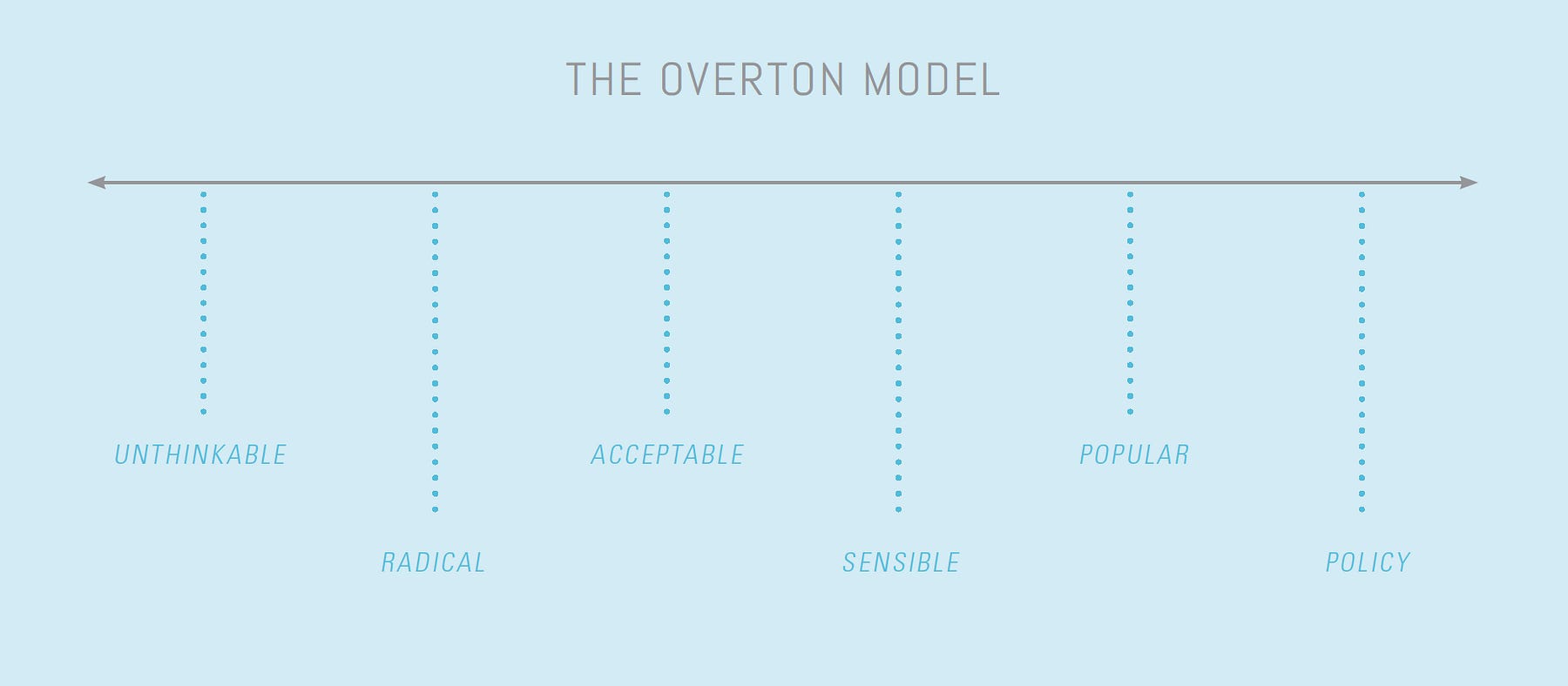
As for those major issues, this past year has been one for the record books: future-altering innovations full of possibility and peril, as well as conflicts over geopolitical territory and national identity—all against the backdrop of substantial shifts of the Overton Window, as previously “Unthinkable” cultural and social conversations enter the “Acceptable” range as we think about our collective future.
We are told we’re living in the late-stage “already but not yet” of the technological realm. AI-related headlines predict everything from a glorious age of unlimited knowledge to the end of civilization as we know it—while at present AI is most useful as a chatbot and imaginative tool for the next wave of startups.
At a much smaller installed base, the same could be said about the Apple Vision Pro. This transformative device from the largest technology firm in history offers the promise of broad transformative applications for learning, working, playing, and relating; yet for the moment it’s “just” a stunning, immersive (and prohibitively expensive) entertainment device. In both cases, the wider effects on the world will come faster than we expect, for better and worse.
Behind all technology is a worldview reflecting an anthropology and an eschatology: an understanding of humanity connected to a desired vision for the future. The year 2023 gave rise to the worldview of “e/acc” (effective accelerationism), passionately articulated by venture capitalist titan Marc Andreesen in “The Techno-Optimist Manifesto.” This view rejects the so-called “safetyists” who want to stop the momentum of capitalism, the free markets, and the geopolitical structures that uphold them.
These ideological conflicts are unfolding even within the very networks that created the technologies, most famously the OpenAI conflict between Sam Altman, his co-founder and board members, and ultimately Elon Musk, in what felt like a Hollywood drama that our children will watch in 2040.
Moreover, a decade-long discourse around social media, devices, and what author Jonathan Haidt has termed “the anxious generation” has bloomed into wide-reaching conversations around generations of youth, the black box of algorithms, government regulation, school policy, and (in cases like video company Bytedance and its ownership and intent around the TikTok platform) even geopolitical dynamics.
At that level, in Russia and Ukraine, in Israel and Palestine, and possibly in China and Taiwan, we are faced with deep tragedy along border conflicts that may ultimately re-sort global alliances and domestic politics for decades to come. Regarding the crossing of borders, the migrant crisis in the US today is real, with image-bearers often treated as pawns to score political points. No matter your position on border and immigration practices, one can agree that individuals with substantial needs are cascading into unprepared cities, which can only bring greater suffering.
Further, much of the promising openness, learning, and positive dialogue around racial inequalities in the US have re-splintered into new battlegrounds from the marketplace to higher education, including highly-contested DEI policies and affirmative action rulings that may have wide-sweeping consequences. This domain of racial justice—where we must obviously see dark spiritual forces at work throughout history—continues to take three steps forward with two (lamentably, sometimes four) steps back. Even Harvard University has found its own reputation and value under attack in many more quarters than before, another stunning shift that previously felt unthinkable but is now acceptable or even popular.
In the midst of this sense of widespread institutional instability, we’re about to face a rerun of our 2020 elections in the US. The mood is dark enough that prescient filmmaker Alex Garland (28 Days Later, Ex Machina) has secured a $50M production budget and a wide release for Civil War, a sci-fi film about nationwide risk and the role of American journalism. Again, this idea would likely have been unthinkable (and therefore unbankable) 10 years ago, but today it is not uncommon to hear that we are “headed toward civil war.” The prospect has moved from the realm of sci-fi into worst-case scenario.
As these dynamics play out at a scale most of us have little to no influence over, even those with high player levels are tempted to withdraw into safety. Ultimately, what can we do about Big Tech’s large language model (LLM) decisions when Sam Altman calls for $7T for AI infrastructure? Is there anything we can ultimately do about Vladmir Putin’s decision to invade or the crisis in the Middle East?
We know we don’t want to chase bad quests that profit from the chaos, but it’s no wonder that we opt to pursue good, easy quests that protect and grow what we have. We might even choose to run a business, nonprofit, or campaign with a “shadow calling” that talks about an issue but doesn’t truly get in the game.
Rightfully, we read the headlines and pray earnestly about the culture wars (and shooting wars) of our world—yet when it comes to our social and financial capital, we naturally internalize these threats as reasons for a conservative, risk-management approach to stewarding our lives and resources. Rather than withdrawal into safety, I propose that our response as redemptive entrepreneurs is to build with hope and meaningful risk.
A case for hope
Entrepreneurship and capital are at the center of all these high-stakes conversations, from what gets funded and started, to who gets hired, to what regulation is formed, to what corporate structures are best, to who controls what—for example, see Musk’s engagement in war through his Starlink platform. For over a decade, we have been talking about the importance of the worldview of entrepreneurs and how they shape culture. If it was true then, it is only more true today.
For over a decade, we have been talking about the importance of the worldview of entrepreneurs and how they shape culture. If it was true then, it is only more true today.
There’s an axiom that seasons of economic crisis are especially creative and generative times. Entrepreneurial people lose jobs, have to create income, can’t readily raise money, and are forced to find practical, innovative solutions with healthy business models at unusual speed. Might this effect be possible, among our community, for these other kinds of crisis in the world? We believe so: that under the pressure of all we face as a society, we can be jolted out of our traditional mindsets and practices to pursue creative approaches to our problems before we are too late to head off greater calamity.
Praxis Partner for Theology & Culture Andy Crouch has recently reminded our team of the mathematical reality that inflection points are not the moments where changes in the curve are most visible. They’re actually the ones where the underlying trajectory begins to turn, well in advance of observable evidence. In culture as in calculus, the most consequential change comes from subtle shifts while the curve is still downward. Although things continue to decline for a time, there are forces at work shaping a future that ultimately follows a long arc toward something more beautiful, just, and redemptive. This is the pattern of the kingdom of God.
Although things continue to decline for a time, there are forces at work shaping a future that ultimately follows a long arc toward something more beautiful, just, and redemptive. This is the pattern of the kingdom of God.
I write this year in the hope that we are drawing near to an as-yet-invisible inflection point of multi-generational redemptive possibility. And we draw hope from all the activity that we see underway in this relatively small community.
Redemptive Responses to Crisis
At Praxis, we have long discussed the idea of creative response, linked with the late Rabbi Jonathan Sacks’s idea of becoming a “creative minority”—the idea that we can stay engaged with the world while maintaining our own faithful distinctiveness.
My greatest hope for our community is that we would be creative peacemakers and assertive culture shapers to both society and souls, bringing faith, hope, and love to a world full of doubt, anxiety, and bitterness.
While this is work worth doing no matter our context or player level, we should not underestimate our redemptive potential. Sam Altman, the aforementioned Open AI CEO who re-risked from high-profile role as President & CEO of Y Combinator, wrote only a few years ago: “A big secret is that you can bend the world to your will a surprising percentage of the time—most people don’t even try, and just accept that things are the way that they are.”
Perhaps instead, we might aim to participate with God as he bends the world—and us—to his will. With this opportunity in mind, I encourage us to adopt three approaches for creative, redemptive response in our present moment.
Work with a thesis-driven methodology
We usually think about our work in thematic terms. It’s common to say “I want to work in business” or “I’m called to nonprofit work,” or more specifically, “I’m fascinated by technology startups” or “my heart breaks for the homeless.” These are all helpful starting points and shorthand descriptions. I propose that a (rare and powerful) next step is to move beyond a theme to a thesis about the future of your focus. This shift is critical for any quest.
While none of us can predict the future, we can intentionally build a view about what is unfolding, and (this is the hard part) what we want to help unfold in the world. Many of the best investors build this kind of thesis to allocate capital. They see it as a method to anticipate what the future will look like, as well as to usher that future into being to capture financial returns. Here’s how Fred Wilson of Union Square Ventures, seed investor in Kickstarter, Etsy, Twitter, and Coinbase, explains it:
Thesis-driven investing involves drawing a picture of where your particular area of focus is going. I like to take a five- to ten-year view. And once you have mapped out that picture, it becomes your thesis. And you evaluate every investment you make in the context of that thesis.
Using these same principles, a redemptive thesis should seek areas of opportunity to encourage positive trends while also disrupting negative trends with transformative, gospel-minded ventures. What would the area we are working toward look like if the kingdom of heaven broke through? What change, what outcomes, what signs would we be praying for in a given area if we were pursuing “on earth as it is in heaven”?
To build a thesis for our work, we take inventory of where things are going and then decide how we might contribute to bending that future to create more flourishing for more people. I love what Kevin Vanhoozer says in his book Everyday Theology:
A multiperspectival cultural [interpretation] uses a variety of academic disciplines and approaches to illumine what is going on in cultural discourse. To get light from various sources we must be light on our feet, prepared to move between history, economics, psychology, sociology, film studies, marketing, and of course theology.
While we benefit from researching widely and wisely on our topics of interest, I believe that this vision of investing our lives in thesis-driven culture-making is also a call to relationship: to work among a community of people with different backgrounds and abilities that enrich our imagination.
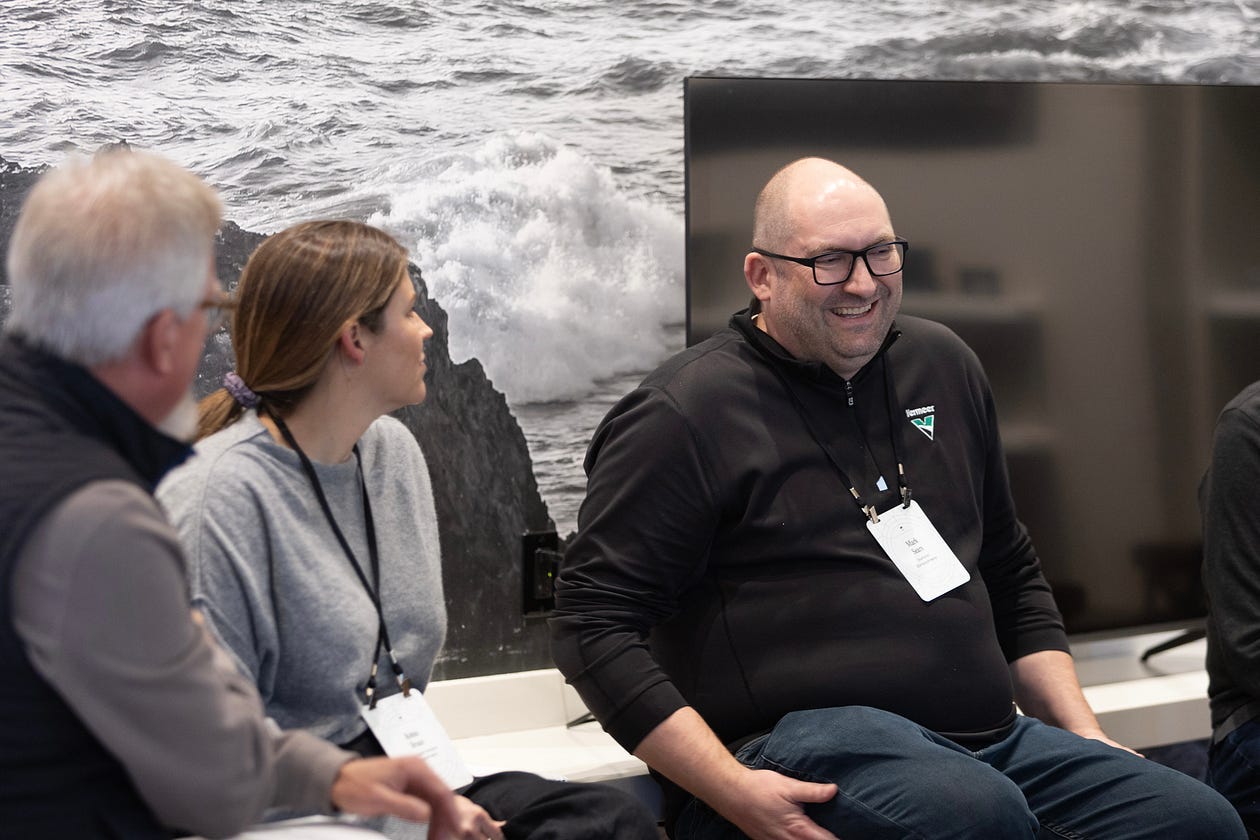
This year, we’re thrilled to be working with two Entrepreneurs-in-Residence (EIRs) taking this posture with their redemptive quests. Mark Sears, a 2014 Praxis Fellow with CloudFactory, has been working on the leading edge of technology all his life. Given recent developments in LLMs, he dug into the technology stack and observed the widespread approach of using these powerful new tools to replace—rather than facilitate—relationships. In response, he’s now building Sprout AI Studio, a venture that starts ventures with an alternative imagination for a redemptive future of AI.
Dan Vogel, Founder & CEO of Flourish Fund, is another current EIR, and he’s re-risking from a comfortable and successful career building and leading Boston Consulting Group’s North American Foundation. He’s developed a macro thesis about the opportunity and need for large-scale faith-based philanthropy to shape the major issues of our time—with the conviction that there needs to be a clear thesis and investment strategy aimed at each issue. Beginning his quest with the well-being of at-risk children and families before and inside the foster care system, he’s motivated to activate the body of Christ toward the protection of the most vulnerable.
Because culture today is always the product of someone’s vision decades ago, we need a cascade of entrepreneurs like Dan and Mark: thesis-driven founders betting on how we can care for those in the wake of all that is to come.
Embrace lament as a generative resource
Praxis community member Terry Looper has often told me how he has seen God use our pain and suffering to point us to things that need fixing. Rick Warren, recently writing on the idea of redemptive suffering, articulated this practically:
Who is better qualified to minister to a parent grieving the loss of a child than another parent who has experienced such grief? Who is better qualified to help someone with an addiction than someone who has also battled an addiction? Who is better qualified to walk with someone through a cancer diagnosis than someone who has fought their own cancer?
As entrepreneurs given to building, our personal pain gives us the opportunity to walk alongside suffering individuals and build ventures that help facilitate redemptive presence at scale.
Indeed, grief and lament are an “inverted lever” of sorts. We encounter some form of pain and use that experience to design solutions that allow others to bear, or even avoid, the same things. (At one level, the venture world understands this intuitively, though “solving pain points” in startup language is often little more than a glib reference to using technology to address minor inconveniences.)
Here, I cannot help but think of Jessica Kim, Co-Founder & CEO of ianacare (Studio 2019). I had the immense privilege of walking alongside Jessica in a season of deep pain and grief, as she cared for her mother in her last years on earth. Jessica’s frustrations with the complexities of caregiving—coordinating support, feeling alone, learning fast, facing loss—led her to ask if this painful time in her life might signal where God was calling her into a new venture. As a serial founder with a high player level, she’s staked this season of her vocation on building a business with nearly $15M in funding, serving over 42,000 caregivers and building a national caregiver alliance in the venture’s first few years.
Often, creative lament comes from firsthand experience that also connects to our learning about historical and present-day challenges. Family history prompted Praxis Fellow Jasmin Shupper (Nonprofit 2024) to build a deep understanding of the racial wealth gap created through segregation-driven redlining. She responded by founding Greenline Housing Foundation, a brilliantly thesis-driven venture that offers pathways to African-American homeownership.
As Frederick Buechner said, “The place God calls you to is the place where your deep gladness and the world’s deep hunger meet.” How do we reconcile lament with gladness? Perhaps for many of us, the deepest wells of joy come from knowing that other people will be able to avoid the pain and suffering that we have known all too well.
Invest in the proximate
Finally, when the forces of the broader culture seem so magnified and complicated, we would do well to remind ourselves of Stephen Covey’s construct of circles of influence and concern. In his influential book The 7 Habits of Highly Effective People he contrasts proactive people (who expand their influence by focusing their energy on what they can do) with reactive people (who diminish their influence by spending energy on concerns beyond their control). Applying this idea to our entrepreneurial work, we should invest our capacity in hard problems within our realm of proximity—areas where God has placed or called us, not simply to the story that dominates the headlines or social feed.
For many of us, where we live offers proximity and opportunity to connect with our biblical mandate to love our neighbors. Mike Bontrager (Praxis Mentor and Board member, Capital Fellowship 2023) has invested several decades in the flourishing of the one square mile of Kennett Square in Chester County, Pennsylvania. He’s planting the seeds for a multi-generation vision in a county population of just over 500,000.
Others find themselves proximate to certain communities in non-geographic ways. Charlie Meyer (Capital Fellowship 2024) runs Threefold, a permanent-capital private equity holding company invested in property service companies and real estate. He is gripped by the way his ventures are deeply implicated (through their employees) in “America’s migrant highway.” He’s now building toward a vision of a $1B firm to be a practical blessing (at scale) to people who are exposed to so much vulnerability.
Amid all the challenges we face, I offer these words of encouragement: First, take heart in the faithful, fruitful work of your co-laborers in the Praxis community; this letter only reports on a small portion of it.
At the same time, we can rest in the fact that our work neither begins nor ends with us. As Bishop Ken Untener offers through a helpful prayer we’ve previously highlighted in our Redemptive Nonprofit playbook, we can remember that we are “ministers, not messiahs.”
It helps now and then to step back and take a long view.
The Kingdom is not only beyond our efforts, it is beyond our vision.
We accomplish in our lifetime only a fraction of the magnificent enterprise that is God’s work.
Nothing we do is complete, which is another way of saying that the kingdom always lies beyond us.
No statement says all that could be said.
No prayer fully expresses our faith.
No confession brings perfection, no pastoral visit brings wholeness.
No program accomplishes the Church’s mission.
No set of goals and objectives includes everything.
This is what we are about.
We plant the seeds that one day will grow.
We water the seeds already planted knowing that they hold future promise.
We lay foundations that will need further development.
We provide yeast that produces effects far beyond our capabilities.
We cannot do everything, and there is a sense of liberation in realizing this.
This enables us to do something, and to do it very well.
It may be incomplete, but it is a beginning, a step along the way, an opportunity for the Lord’s grace to enter and do the rest.
We may never see the end results, but that is the difference between the master builder and the worker.
We are workers, not master builders.
We are ministers, not messiahs.
We are prophets of a future not our own.
We define a redemptive quest as good, hard work pursued in love that calls us to re-risk to the fullness of our talent and resources. So, as we undertake these quests, our role is “merely” to show up faithfully, with all our creativity and imagination, all our rigor and skill, and lay them at God’s feet.
We understand the times to become culturally astute, yet unshakable by the world’s pragmatism and compromise. We train ourselves to unmask Mammon’s lure to accept exploitative norms as progress and advancement.
We build prophetically—demonstrating through our work the upside-down way of God’s kingdom. Best of all, we are free to leave the outcome up to the Lord, on his time horizon, at whatever scale he allows.
