

Each year, Praxis Co-Founder & CEO Dave Blanchard delivers an update in the form of a Community Letter. The following essay is adapted from Dave’s 2026 address at our 10th Redemptive Imagination Summit, as he looks back at the first 15 years of Praxis and shares a cultural strategy for the next 15 years ahead.

Fifteen years into our work, I am thankful for what God has done among us and through us; I cannot imagine a more encouraging community. From our early days, we’ve talked about a 30-year vision for our work, and halfway into that, this year’s letter looks back and forward as we think strategically about the years ahead.
When Praxis was founded in 2011, the world was a lot different—technologically, economically, socially, and politically.
We stood in line for the iPhone 4, and the App Store was all the rage. Facebook added the timeline format following the release of Instagram the year before. Netflix shifted to focus on streaming while still sending DVDs by mail. Spotify came over from Europe and launched in the US with its “revolutionary” music subscription model.
WeWork began renting its first location. UberCab became Uber and expanded to its second city—New York. Kenya’s M-PESA surpassed Western Union in daily cash transfers. WhatsApp hit 10 million users, and Tencent launched WeChat.
The “algorithm” wasn’t in our vernacular, and we were optimistic about technology and social media. All of this in 2011—the same year Marc Andreessen told us software was “eating the world” in the Wall Street Journal.
Geopolitically, it felt like terrorism had been conquered: Osama Bin Laden was found, the Arab Spring emerged in the Middle East, and the US had exited Iraq, however imperfectly. Many in China were coming out of poverty as the country grew to the world’s second largest economy. Barack Obama had become America’s first Black president, and regardless of one’s political persuasions, there was a sense that this milestone represented hope for racial healing and progress.
All this to say, when we founded Praxis, the world felt a lot more hopeful. But while the past 15 years have led to a lot of wonderful things inside Praxis, it’s turned out to be far from “on earth as it is in heaven” out there. Consider David Brooks’s comments in his farewell column in the New York Times earlier this year, which summarize some of what we’ve felt in the US:
When I think about how the world has changed since I joined The Times (2003), the master trend has been Americans’ collective loss of faith—not only religious faith but many other kinds. We have become a sadder, meaner and more pessimistic country. Large majorities say our country is in decline, that experts are not to be trusted, that elites don’t care about regular people. Only 13 percent of young adults believe America is heading in the right direction. Loss of faith produces a belief in nothing. The most grievous cultural wound has been the loss of a shared moral order…the crucial question facing America is: How can we reverse this pervasive loss of faith in one another, in our future and in our shared ideals?
Amid so much change, the last 15 years did offer an opportunity to design an ethical and even redemptive future through new technology, media, politics, and more. Instead, the world’s leading founders, funders, innovators, and culture makers—along with their masses of followers—made different choices. And sadly, Christians have participated in, and sometimes led the way, in this ends-justify-the-means approach to cultural engagement.
We’ve experienced nothing short of a historic social disruption of trust, identity, and optimism. Losing this shared moral order has also blurred our sense of identity as American evangelicals, our labels co-opted for culture-warring strategies over Christ-like love.
As society loses faith in each other and institutions, what does it even mean to be known as a Christian? Those of us who strive to seriously apprentice ourselves to Jesus can feel pretty misunderstood.

From One Disruption to the Next
Over the next 15 years, we’re looking at a cascade of anticipated disruption from artificial intelligence. With each new LLM model, some part of what we thought we could uniquely do slips away. And so we face another existential question: What does it even mean to be human?
We’re told a set of paradoxes: We’ll be able to do more than ever before, and we may not have a job at all. We’ll become more creative, or the machines will turn into our tastemakers and storytellers. The next generation of AI-natives will build a whole new world, or maybe they’ll just suffer within it. We’re not sure what’s coming, and what we’re told is both potentially exciting and terrifying.
So what do we do?
Our default response may be to protect what’s ours. How can we preserve our jobs, industries, and enterprises, our cash flows and capital? How can we maintain our affluence? How can we ensure our kids’ security? During times of uncertainty, plenty of us instinctively de-risk to manage our fears.
Another response is more adventurous but still self-serving. Rather than being overwhelmed, we look for ways to capitalize on the moment. We can become almost manic in our pursuits, striving at the gold rush in front of us. Along the way, pride takes over. We marvel at the superhuman scale and pace made possible with our capable co-pilots and agents.
In contrast, it can seem noble and reasonable to simply pursue the ethical. How can we scale our organization with AI? How can we ensure that our firms and their supply chains work in a new geopolitical landscape? But we ought to be careful not to make this the primary lens through which we think about the future. We should not come to an event like this asking, “How can I be ready for the AI revolution?”
To quote Ronald Rolheiser, “Deep down we know that we’re capable of more, that God is inviting us to more, but that we are fixated at a certain level of mediocrity. Simply put, there are still too many compensations, addictions, and accommodations to comfort in our lives. As well, there is the fear of moving beyond what disrupts our lives. We live faith, hope, and charity, to a point, and there was a time when that point was enough, was what God was asking of us. Now, however, we sense a deeper call and know that we are being asked to let go of many of the things, both good and bad, to which we are clinging for comfort and stability.”
Indeed, we need to continue to surrender and cultivate our own redemptive imagination. We need to ask: How might we be most prepared to care for the world in a time of social and economic disruption and overall cultural anxiety?
The world does not need common approaches from followers of Jesus; it needs us to re-risk for the good of others when everyone else is out for themselves.

Developing a Cultural Strategy in Historic Disruption
Moments of historic disruption like what we are stepping into are by their very nature rare; they are named as revolutions. Our job is not to survive them; we have the opportunity to re-shape our world in unprecedented ways if we move with intent and strength instead of waiting to see what unfolds or “hedging our bets.” Putting redemptive imagination into action with our full culture-making capacity gives us hope that the next 15 years might go differently than the last.
We at Praxis don’t just need a high-growth, practical organizational vision and strategy for this moment but a thoughtful and ambitious cultural vision and strategy. Harvard Business School authors Douglas Holt and Douglas Cameron show us a way to think about this in their 2010 book Cultural Strategy: Using Innovative Ideologies to Build Breakthrough Brands. They write:
For most innovation experts, future opportunities mean one thing—the commercialization of new technologies. Cultural entrepreneurs [play] an entirely different game. Ideological opportunities are produced by major historical changes that shake up cultural conventions of the category, what we call a social disruption. Since cultural innovation is about locating a specific historic opportunity and then responding to this opportunity with specific cultural content, cultural strategy must be tailored to these more specific historical and contextual goals.
Nike succeeded with innovative cultural expressions, not with innovative products. Nike proposed that a particular sports myth about performing beyond all expectations provided a powerfully motivating metaphor for the ideological anxieties Americans faced as globalization hit the American job market. This economic and ideological collapse led many Americans to search for alternative ideological moorings that would allow them to realize their American Dreams, a search that would go on for over a decade, until the country had once again securely established its political and economic leadership in the world.
While the authors focus on business management for economic opportunity (studying iconic brands from Nike to Marlboro to Patagonia), we can apply their method toward redemptive ends: changing the cultural narrative and shifting the Overton window on the major issues of our time.
Holt and Cameron highlight a clear framework:
Identify Cultural Orthodoxy: Over time, industries and organizations get locked into a way of doing things that looks familiar—what they call a “cultural orthodoxy.”
Identify Disruptions: When tectonic shifts happen in society, they locate new “ideological opportunities,” which create demand for new expressions that the old orthodoxy can’t deliver on.
Locate “Source Material” in Vibrant Subcultures: Emergent communities (often dense networks) and social movements become the source material for change.
Pursue “Cultural Innovation” through Storytelling: The ideas, stories, and “codes” of the subculture’s community create a new imagination.
Organize to Cross the Chasm: They advocate for building a “cultural studio” model to move ideas from subcultural appeal to the mass market.
We’ve seen a recent example of this with Jonathan Haidt’s breakout work around youth and technology—which our own Partner for Theology and Culture Andy Crouch has taken part in. Haidt’s book The Anxious Generation sits at the crescendo of a movement pushing back on Big Tech’s harmful effects on kids.
Within just a few years, the “social media is cool” orthodoxy began to fray. Parents began to decry the corresponding mental health crises and unplugged, dumbphone subcultures emerged—source material demonstrating a different way forward. Backed by media, advocacy, and public policy, it’s become a mass market norm for us to interrogate youth engagement with screentime and social media.
This is not easy work, but it is incredibly fruitful. Holt and Cameron’s approach relies on highly creative, entrepreneurial teams building from “deep cultural immersion.” As Dallas Willard once said, “Understanding is the basis of care … whether for a petunia or a nation.”
We should follow this model, while acknowledging that for us at Praxis developing a redemptive cultural strategy draws from God’s design for human flourishing—connecting cultural strategy into our community’s classic combination of theology, culture, and entrepreneurship. This creates a repeatable method for creative and prophetic contribution on the major issues of our time.
Imagine, for example, if Christians became known for ushering in a presence economy in the age of AI. First, we’d need to commit to immersion, not avoidance, on the breakthrough technologies of our time. We’d be the ones to match a capacity to build at the highest level with Christ-like care for the world.
We could design AI applications that encourage people to get together in person (Sprout AI Studio, Mark Sears). We could invest in building companies that demand human-led experiences around caregiving (Ianacare, Jessica Kim) and building the “next hometowns” in global markets (Hometown Equity, Brett Hagler).
In response to the rise of remote work and AI “companions,” we can design the hybrid workplace for flourishing, maximizing in-office connection (Kadence, Dan Bladen). Our nonprofits could help the local church deliver inclusive “high care, high community” models even in megachurch settings, knowing people will need personal attention more than ever (Portfolio ventures Sanctuary Mental Health Ministries, Settled, With Ministries, Every Mother’s Advocate, and many more).
With the right commitments and approaches, two of the major social disruptions of our time—our Christian identity and our human identity—could turn into opportunities for us to offer a powerful new vision to the world. And the great news is that the starter work of everything I’ve mentioned is already underway in the Praxis venture Portfolio.
A Cultural Strategy for Praxis
And that makes for a good transition into Praxis’s organizational cultural strategy. Holt and Cameron write that “historical changes in society create demand for new culture—ideological opportunities that upend this orthodoxy. Cultural innovations repurpose cultural content lurking in subcultures to respond to this emerging demand, leapfrogging entrenched incumbents.”
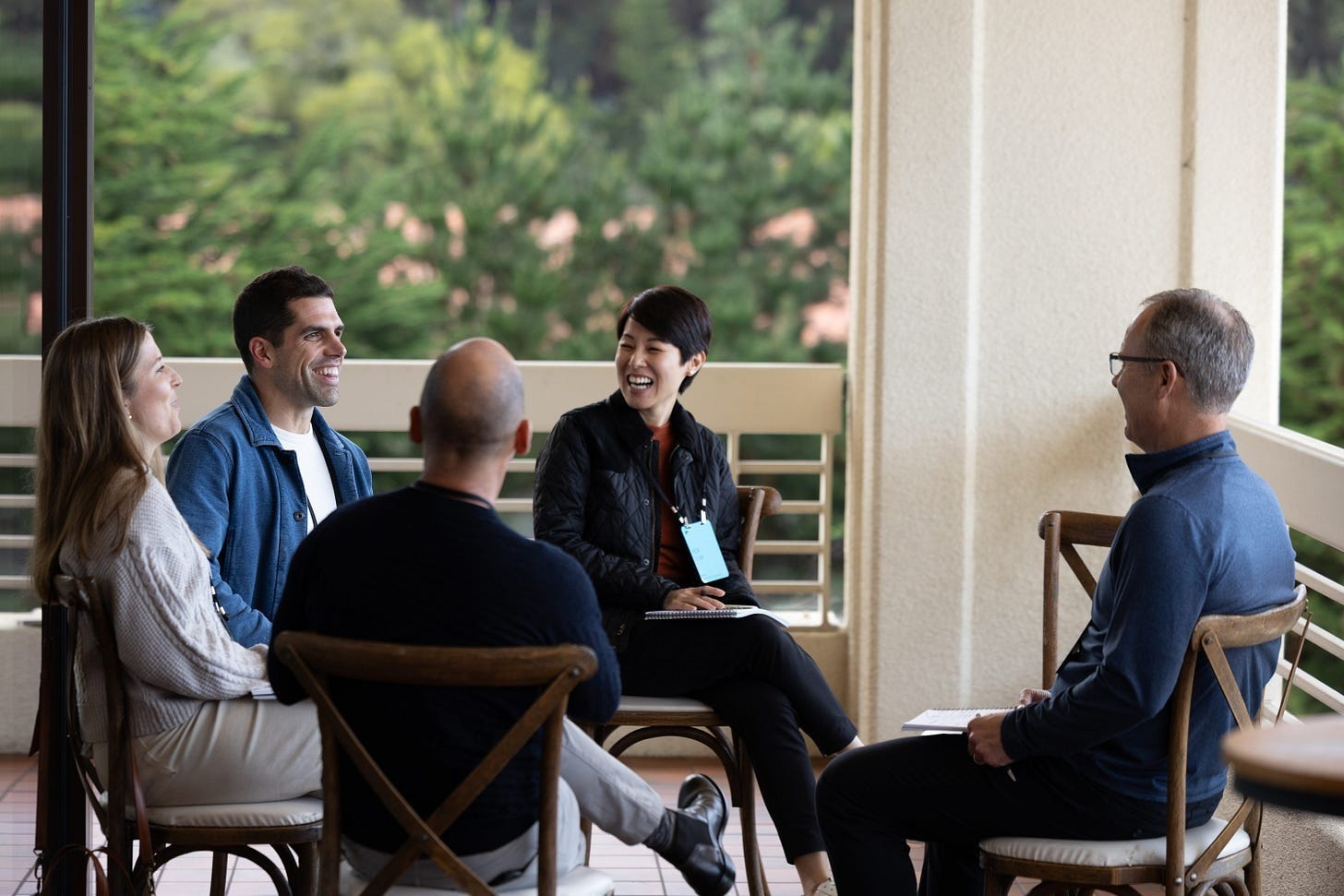
What if redemptive imagination were the cultural innovation lurking in the subculture of this community? After 10 years of hosting our Redemptive Imagination Summit, I’ve heard over and over something like this: “I wish that more people could be in this room, so they could actually be encouraged about what Christians are doing in the world.” New Accelerator Fellows, attendees at Regional Gatherings, and Summit guests often tell us they feel like they have stepped into a different world—away from the cynicism, divisiveness, and disillusionment that wants to steal our joy on a day-to-day basis.
There is a growing discontent with the status quo, and I believe that the antidote is inside our community. Despite 15 years of what has often felt like a divergence from the broader culture, the redemptive way—the gospel embodied in people and projects—remains a singular path toward healing and hope.
So here is a cultural strategy: Together and in humility, let’s distribute the moral ecology of our community around the world—a system of belief and behavior that points to a new way forward: a communal, redemptive, culture-making way in a time that knows only loneliness, exploitation, and culture warring.
We need a leapfrogging of those cultural incumbents; we need to reach more with this way of being—across the globe and into the pews. We need to rapidly expand the ethos of the Summit room. Indeed, I was so encouraged to discover that in the final strategic documents of the late great pastor and author Tim Keller, one of his top ideas was what he deemed “Praxis on steroids”—calling for the “major new funding and expansion” of a community such as ours as part of one of five major moves for renewal in the church.
Imagine if this came true: If Christians could move from being known as culture warriors to culture makers, known not for what they fight against but for what they build out of love for the world. Imagine if the Church were the largest social force combatting loneliness, demonstrating what it is like to live adventurous, risk-filled lives together to love our neighbor. And imagine if we rejected the two-wrongs-make-a-right exploitation of “the other” and met the challenges of the world with redemptive action—creative restoration through sacrifice.
We have to have the audacity to ask: Can the ethos of redemptive imagination become the spirit of the age?
Even the most optimistic of us may have a difficult time believing that’s possible. But we’ve seen it in history: The aftermath of the Gin Craze in England (1720-1751) gave way to the social disruptions of the Industrial Revolution (1760-1840), when the Clapham Circle (1790-1830) and their overlapping business and financial networks deployed their missional, entrepreneurial pursuits.
As William Wilberforce famously said, the Lord had put two things before him: the abolition of the slave trade and the “reformation of manners,” or what we today would call the renewal of culture. If you’ve been in our community for a while, you’ve heard how their biographer said that “the ethos of Clapham became the spirit of the age,” acknowledging their success, at least in their generation, against all odds.
This sort of cultural change—in our time or theirs—does not just depend on more extraordinary entrepreneurs or funders. It calls for an awakening of redemptive imagination among all of God’s people. Back to David Brooks, who asks:
Where do people and nations go to find new things to believe in, new values to orient their lives around? They find these things in the realm of culture. In my reading of history, cultural change precedes political and social change. You need a shift in thinking before you can have a shift in direction. You need a different spiritual climate.
I mean “culture” in the broadest sense—a shared way of life, a set of habits and rituals, popular songs and stories, conversations about ideas big and small. When I use the word “culture,” I mean everything that forms the subjective parts of a person: perceptions, values, emotions, opinions, loves, enchantments, goals and desires. I mean everything that shapes the spirit of the age, the moral and intellectual moment, which constitutes the shared water in which we swim. In this definition, every member of society has a role in shaping the culture. We all create a moral ecology around ourselves, one that either elevates the people we touch or degrades them.”
With this in mind, Praxis is making a subtle but meaningful shift, turning outward to invite everyone to discover their redemptive calling for their life and work. We’re not leaving behind redemptive entrepreneurship; we’re building on it. We believe every follower of Jesus is a culture maker, whether in boardrooms or break rooms, kitchens or clinics, study halls or city halls. We believe it is our ultimate responsibility—as an organization, as founders, as a community—to awaken redemptive imagination.
We’ve seen this sort of organizational evolution succeed before. Consider Ashoka, founded by Bill Drayton, who pioneered the term “social entrepreneurship” in 1972. At the time, it was a novel idea that entrepreneurship could be applied to social problems. Ashoka began investing in social entrepreneurs to influence systems through a global fellowship program. After two decades, they realized that they needed to reach a broader audience to truly work on cultural change and shifted their language to “change makers.” The move allowed them to expand from programmatic work with fellows to initiatives on youth development, education, business, and more.
A decade later, their tagline “Everyone a Changemaker” invited all of society into collaborative problem-solving. They didn’t leave behind their roots—today, Ashoka has nearly 4,000 fellows transforming systems through social entrepreneurship as they continue to lead a global conversation around social change. As their audience widened, so did their organization and the broader movement: Ashoka is now a $42M nonprofit, and social entrepreneurship has grown from niche to normalized across the globe.
We have to have the audacity to ask: Can the ethos of redemptive imagination become the spirit of the age?
In this spirit, perhaps our boldest re-risk of this next season is setting out to activate the redemptive potential of all of God’s people. Under the leadership of Paul Martin, our Managing Partner for Praxis Media, we’ve begun to create formational resources for leaders and their enterprises, churches, ministries, and communities.
We’re excited to beta release the Praxis Course 2.0 at Summit, with a full rollout in the fall. This course has been a labor of love for many, most substantially from Praxis’s longtime Partner for Content Scott Kauffmann (who has moved into a Venture Partner role after 10 incredible years shaping our mission). The Course integrates the biggest ideas this community has developed and lived out, and we hope to “cross the chasm” to share them with a much broader audience.
If you think about the modern toolkit for Christians, Alpha has become a clear leader in evangelism. Groups like Bible Project help build theological depth. More recently, groups like Practicing the Way aim to build congregations committed to discipleship through apprenticeship to Jesus. But there appears to be a gap where no organization or set of ideas has emerged at scale to help Christians think about redemptive mission beyond standard faith and work programming. Our hope and design is to fill that void.
In addition, we are platforming more of the redemptive work we’ve seen in our community, sharing leaders’ moments of conviction and calling through our Redemptive Imagination Stories series. We’ll re-release the Praxis Podcast, going deep into ideas of the Praxis Course and speaking at length with Redemptive Quest exemplars. We’re also introducing a new hub for ideas and stories on Substack called the Praxis Press (welcome!), a resource to share your imagination and work with the broader world.
At the same time, our work continues to expand as Praxis grows into a truly global ecosystem for redemptive entrepreneurship. In January, we were in Singapore and Nairobi to launch our very first global accelerator cohorts, representing Asia Pacific and Africa. Combined with our US Accelerators, we saw over 600 new ventures apply this year.
We believe more than ever in the compounding work of building a global venture portfolio with a community around it. Year over year, our mentors, founders, and funders work together to create a true demonstration of redemptive imagination.
It’s a great joy to celebrate over 300 active businesses and nonprofits, with $897M in annual revenue and 14,575 employees across 113 countries. Their relational attention and financial backing has helped 92% of ventures in our accelerators survive and thrive, with the Praxis community providing over $185M in early-stage investment and philanthropic capital. On top of this, after four years, we now have 66 Capital Fellows deploying billions of dollars across investing and philanthropy through a redemptive lens.
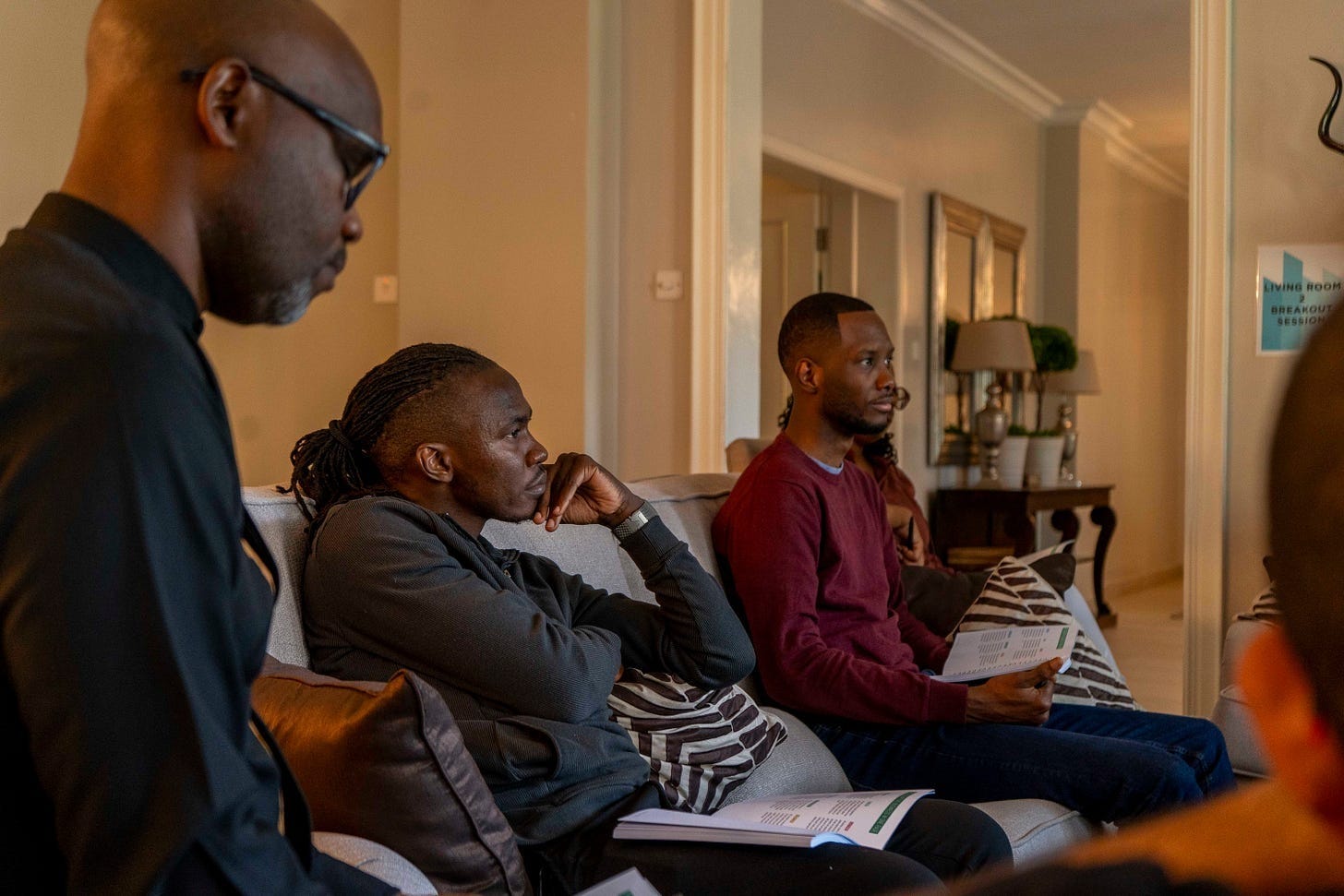
As the flywheel turns, this year, we’ll host over 1,000 community members in person across our Summit, Regional Gatherings, and other high-touch programming. And at the foundation of this global work are the trained ecosystem builders across 115 global markets who are advancing redemptive ideas in a variety of ways, from sharing the redemptive frame over dinners and talks to hosting over 70 Labs—venture-focused mentoring retreats that have influenced 600 founders around the world.
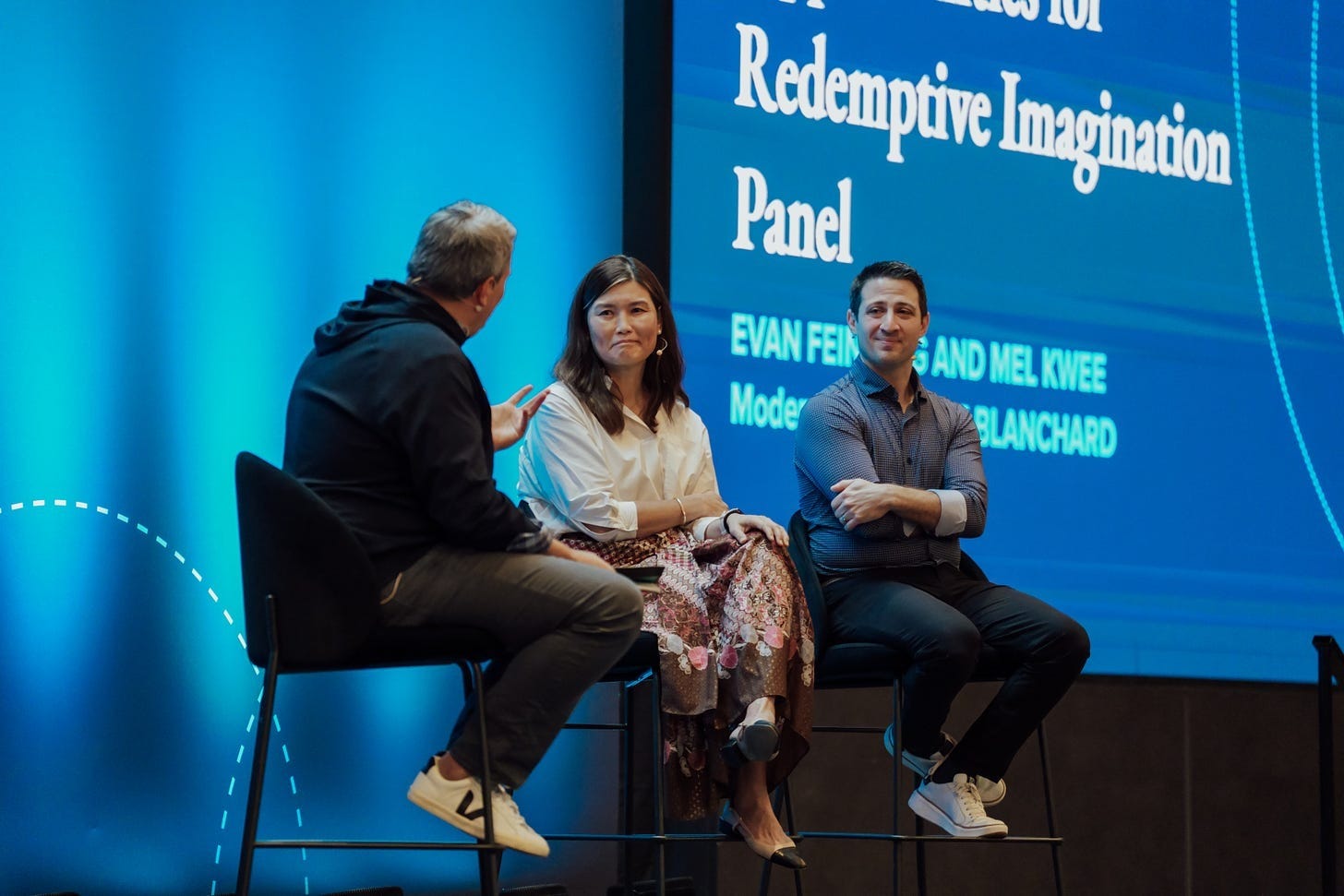
As our community continues to grow, organizing focused sub-networks is critical for even more specific applications of redemptive opportunity. This year, under the leadership of new Praxis Partner Evan Feinberg, we are launching the Redemptive Imagination Project to advance our Opportunities for Redemptive Imagination (ORIs) to the next level. Since their first release in 2021, our ORIs have begun to anchor our community—organizing our annual Summit dinners, connecting ventures and capital, shaping our Accelerator selection, and bringing world-class leaders into our work.
As a next and much more substantial step forward, the Redemptive Imagination Project will serve as a “cultural studio” working to shift innovation paradigms on the major issues of our time. We are teaming up with 24 new Praxis Venture Partners leading 18 ORIs to develop networks, ideas, and projects that transform the narrative—and the reality—of how Christ followers work for the good of our neighbors. Together, we are setting out to craft a robust cultural strategy across ventures, media, capital, and whatever is necessary to creatively make change.
To us at Praxis, you’ve provided friendship, encouragement, vision, action, and most recently, substantial growth resources. In 2025, we were blown away to complete a $25M Quest Fund, part of what is now $75M this community has committed to Praxis over the past 15 years. For all of this, we thank you deeply. We’ve gotten to do this meaningful work with wind behind our sails.
We’ve seen this as a virtuous cycle within Praxis so far: When we hear of each other’s pursuits, we awaken a redemptive imagination in each other, which allows for more demonstration, which leads to more awakening, and so on.
Historically, the word “awakening” has been used to name periods of spiritual revival in the Church. While we long for revival in the traditional sense—repentance, new believers, baptisms, and a broader culture responding to a mysterious presence of the Spirit—we also see an awakening of faith in action stirring. In 2026, the Church needs a revival of not only our hearts but our hands and minds.
With our imaginations redemptively awakened, we become even more compelled by love to care for the needs of the world. This way of life is what Jesus called us to. It is a way that says: With all I have, I exist for the redemptive possibility of the other.
An awakening of this kind, at a broad scale, could not be contained—it would not only reshape the next 15 years but the generations to come. We would do well to together remember the axiom, “We greatly overestimate what we can accomplish in a year, but greatly underestimate what is possible in ten.” May we go with God in all of this.
Dave Blanchard
Co-Founder & CEO
The only thing that counts is faith expressing itself through love. - Galatians 5:6

Excellent summary and story, Dave. Grateful for ALL that Praxis has done, organized, gathered, and instilled. I have been impacted by the Redemptive frame for years, since following/discovering Praxis around 2016. 10 years now as an ecosystem builder for startups in the marketplace, and I continue to think redemptively in my work, faith, family, and writing projects. Grateful for the community and the vision to come!
Beautifully written and inspiring work to redirect my gaze off of myself and towards the redemptive. Thank you Praxis!