

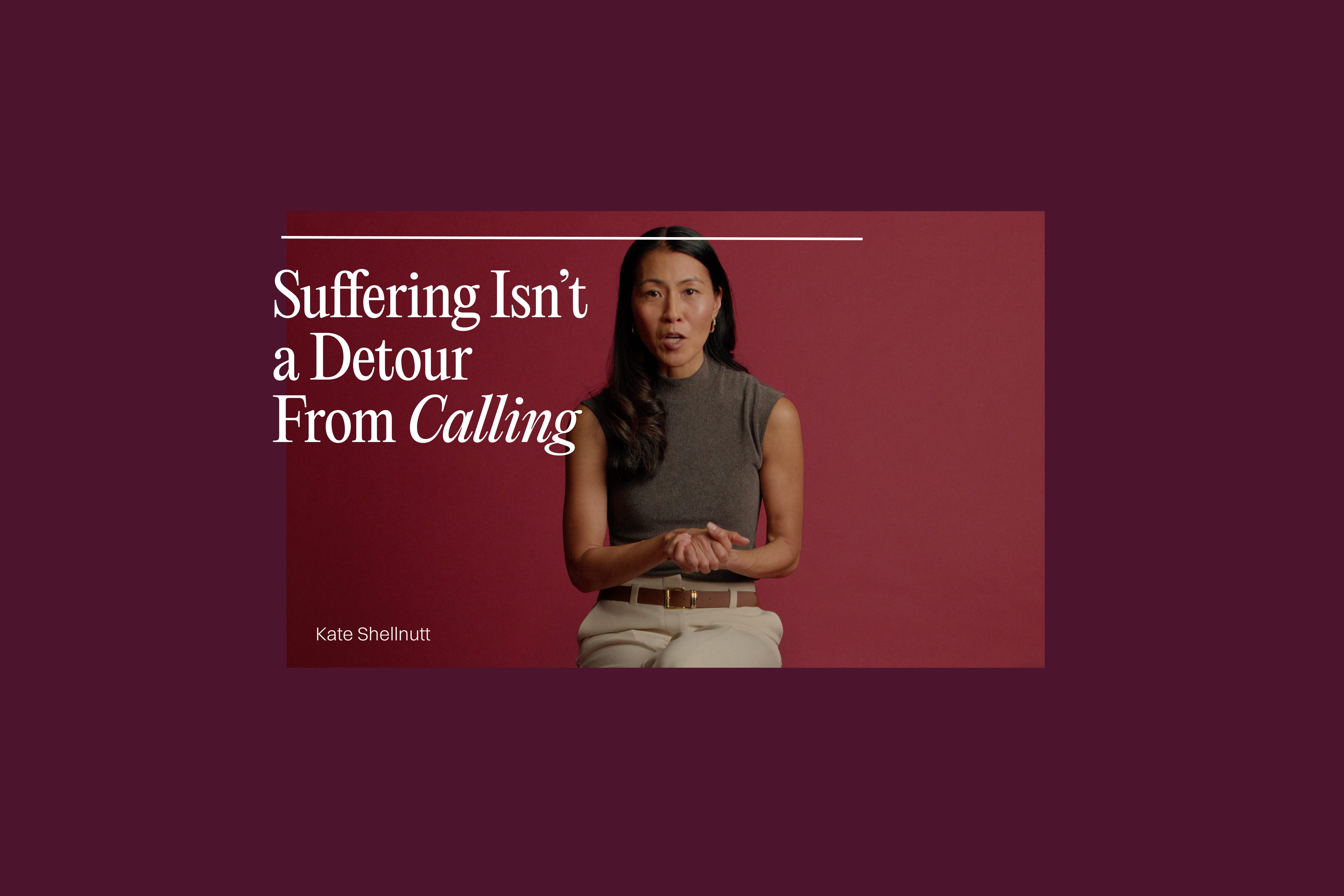
Jessica Kim thought she knew how callings work.
Growing up, she learned that when God gave you a vision, it was up to you to work hard and make it happen. Her parents would encourage her, asking, “If not you, then who?”
Raised in a Korean American church, Kim’s convictions deepened as she professed faith as a teenager. She went off to college eager to live for God.
With each idea, she knew what to do: Say yes, and go after it with her all.
First it was a baking business, started out of Kim’s dorm room at Brown University back in the mid-1990s. Fueled by Kim’s bold confidence and can-do hustle, Jessica’s Wonders raised $1 million her senior year. The company grew into national distribution, selling banana bread in baskets labeled with John 3:16.

Then came a corporate career and another startup, BabbaCo., which curated activity boxes for kids. Once again, Kim went all in. Sleeping just a few hours a night as a young mom, Kim did whatever it took to hit the metrics, raise the funds, and grow the brand.
“What I felt was this pressure to succeed for God, that all of this was given to me and that I had to be a good steward of it,” she said. “And slowly and very powerfully, my definition of success started getting very blurry.”
Years in, Kim realized she’d been approaching calling all wrong. God wasn’t setting up opportunities to prove that she could achieve something great on her own; he was inviting her to work with him. She released the pent-up stress and expectations and broke down in tears.
Like vocation—derived from the Latin term for voice—the word calling evokes hearing a call, a message summoned by another. The term has referred to everything from calls to pastoral ministry to the search for personal career paths.
People already feel pressure to find a job that brings them financial success and personal fulfillment, and for Christians, the idea of their own individualized calling can add spiritual weight to that pressure.
“The Church has absorbed and assimilated the cultural message about pursuing your passion, following your passion, and fulfilling your dreams,” said Karen Swallow Prior, author of You Have a Calling: Finding Your Vocation in the True, Good, and Beautiful. “When the Church is having these conversations, we have to be very careful that we’re not just repeating what the culture says.”
While Scripture is full of instances of people called to particular professions, places, and roles, a biblical understanding of calling doesn’t depend on career trajectories or personal satisfaction, Prior writes. The primary call for God’s people is more fundamental: to bear the image of the Creator.
“There’s some image bearing and some image restoring that only I can do today.”
Bearing God’s image—and working to restore it in the places in the world that are dark and broken—extends across every area of life, for all of life. And people also have what Andy Crouch calls “contingent callings,” which change based on the settings and circumstances they happen to be in.
“Think of all the big things that are the way they are in our lives. Every one is an invitation. How do I bear the image here?,” asked Crouch, Partner for Theology & Culture at Praxis. “That is, how do I cultivate and create in a way that would honor God with what I’ve got contingently today, and how do I restore the image?”
“What’s broken in the world that I inhabit, which no one else inhabits? No one else is going to be able to do this for me. Only I can play the role I play in my family. Only I have the job I have in my workplace, and there’s some image bearing and some image restoring that only I can do today,” he said.
Jessica Kim’s roles changed dramatically in 2014, when her parents moved from New Jersey to live with her family in Boston while her mother received treatment for pancreatic cancer.
“I ended up quitting my job for the first time ever in my life, in my career, to be her full-time caregiver,” Kim said. “I just couldn’t be up at 1am, 3am, 4am, and taking her to all of her appointments while still working and having three kids that were ages ten, seven, and five.”
The youngest of three, Kim cared for her mom, eventually seeing her through a period of hospice and two grueling months of active dying. This was the calling before her for a season. And it’s one that more Americans also find themselves in, with 10 percent of US adults caring for an aging parent and the vast majority of hospice patients being cared for by a relative at home.
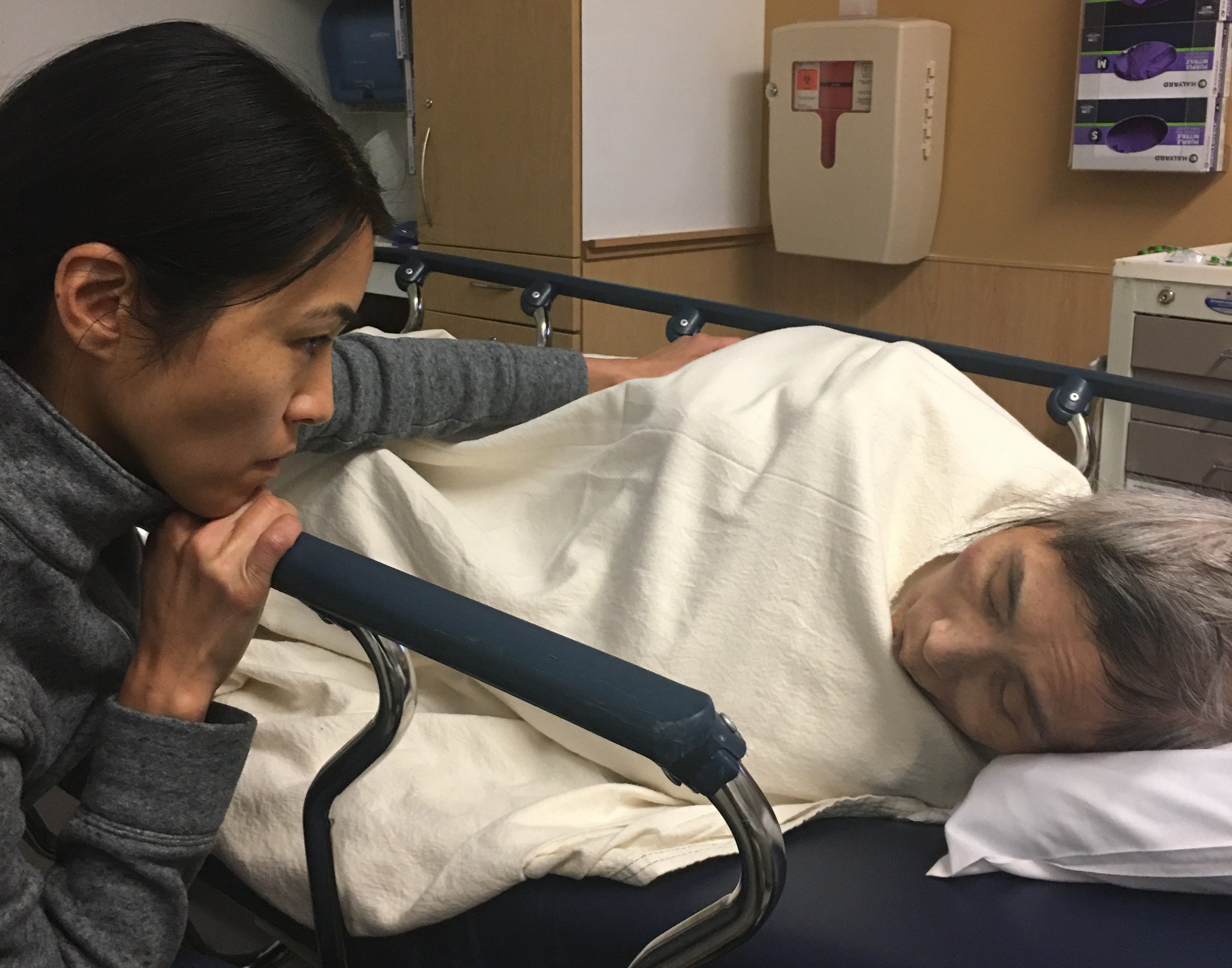
Caretaking ultimately left Kim drained. She felt the weight of her mother’s death, compounded by her anger at a healthcare system that did so little to extend support. The two-time founder never expected that this experience would lead to her next venture. She balked at the idea.
“Are you kidding me? What I went through and what’s happening and what millions of people go through is not a business,” she said. “This is like a cultural issue. Our society is broken. We don’t know how to show up for each other. This is not a product or service, and it is absolutely not a business.”
But Kim kept thinking about it. She dove into research around hospitals, the history of palliative care, and technology in healthcare. She read scholarly journals and poetry by 85-year-old patients.
And once again, an idea stirred. She saw an opportunity, not to optimize or outsource caregiving, but to build caregivers a support system. She named her next venture “I am not alone” care, Ianacare.
Not every difficult season results in a new venture or vocation. But suffering can lead people into callings they never otherwise imagined. In her book on calling, Prior brings up how even though people associate passion with love and excitement, the term itself also means “suffering.”
Calling can come with a sense of ease and reassurance—“I’m doing what I’m meant to do”—but no guarantees of success. In fact, the more people advance in their calling, the more likely they are to face profound brokenness within it, said Crouch. At that point they have to ask themselves whether they will enter further into suffering to help bring about restoration and redemption.
Praxis Co-Founder and CEO Dave Blanchard worked with Kim as she considered developing a caregiving venture as an entrepreneur-in-residence back in 2017. Kim said even though she initially wasn’t interested in a startup around caregiving, Blanchard saw “what was stirring in her heart” and invited her to explore the idea, no pressure. Nine months later, she realized he was right.
Blanchard said, “Some of the most inspiring individuals I’ve had the chance to work with are folks who have said, ‘How can this suffering that I’ve experienced be prevented in some small or large manner for others? Maybe I will step back into this thing that I very much don’t want to be a part of but suffered through, and unlock possibility and freedom for others.’”
Kim approached Ianacare differently than her other ventures. There was no gritting it out, no expert solutions to land for the complexities of caregiving and the surrounding grief. She found herself growing more dependent on God and community. Rather than chasing quick success, she set her eyes on the longer-term impact that could resonate for generations.
Over the past nine years, Ianacare has grown to serve more than 50,000 families and become an approved partner in a new Medicare program supporting dementia caregivers. The company has seen its core belief lived out: Families who are supported in caregiving see better outcomes for both patients and caregivers.
Kim also went from the founder of a resource for caregivers to a caregiver herself once again, as her dad neared the end of his life and died from congestive heart failure two years ago.
“A lot of founders create something that they wish they had in hindsight, and I had this unique opportunity to experience Ianacare as I was caring for my dad,” she said. “Even though I was still physically alone at 2 am or 4 am, caring for him, I didn’t feel emotionally alone and that makes a huge difference. The system is still complex and there was a lot to navigate, but I knew who to call and what to ask.”
“God shows us all the time that he calls those in pain to be with others.”
What she went through hit hard, further proof of her belief that “caregiving is not something to be solved.” After the loss, things got so dark for Kim that she wondered whether she could continue to lead the company.
She turned to the network she built with Ianacare, people who knew her pain. The only answer, she found, was to lean into the suffering together.
“If we can be a neighbor in pain, that is where the true ministry begins. And that is what we’re called to do,” she said. “God shows us all the time that he calls those in pain to be with others, that he’s with us in that. So that is truly what it means to be not alone is that in your darkest moments, in your most painful moments, that you have someone who understands and who will be just still with you.”
Explore more about calling and follow Kim’s story in The Praxis Course.