

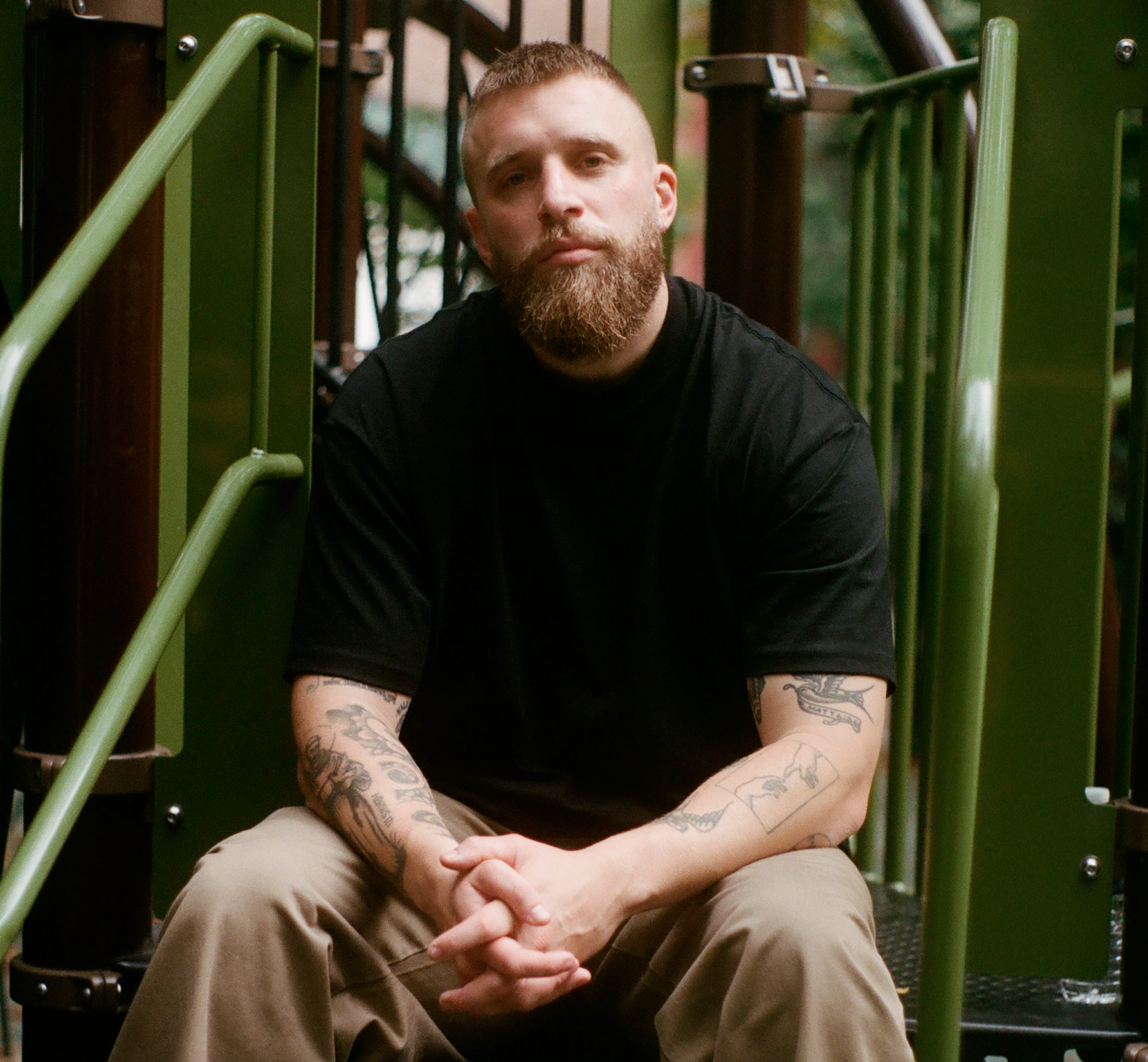
Joshua Luke Smith lives between grief and play. Between the sudden loss of a dear friend and storytime on the floor with his curly-haired kids. Between hearing the stories of incarcerated men and practicing jiu-jitsu.
At 36, after walking through learning difficulties, doubt, and addiction, Smith has landed in a place where, as he writes in This Is the Main Event, he sees the life he longed for hidden in the one he has.
Those ordinary moments form the beats of Smith’s work as a poet, pastor, and founder of The Psalmists, a ministry bringing creative practice into prison, which he laments has become “a place of storing people rather than restoring people.”
The tattooed British bard writes with snapshot detail and spiritual depth, echoing the rhythms of his songwriting sensibilities. He references “juice from IKEA glasses,” “Mona Lisa selfies, eyes empty,” and “the blue flame of grief.” His poetry invites readers to “take my broken heart and calloused hands” and “from the ashes throw confetti.”
“I want to feel gathered, and people want to feel gathered, and somehow words do that,” Smith said.
In conversation too, Smith pulls references from Scripture, church fathers, theologians, and fairy tales, quoting everything from Augustine and Kierkegaard to Timon from The Lion King.
The son of British missionaries, Smith spent part of his childhood in Pakistan before returning to the UK at 9. Now a father of two living in London, he has watched his country change. When he studied philosophy in 2011, in the wake of New Atheism, calling yourself a Christian required “a strong, robust apologetic,” he said, and now there’s “this desperation for the story of my childhood, the story I took for granted.”
Smith recently visited the Praxis team to share his own take on redemptive imagination: what it means to return and redeem, to reclaim some childlike wonder even when you’ve been through grief and brokenness. It’s part his story, part the story he sees in the men he meets in prison, and part the story we all walk through as we hope in all things new.
This interview has been edited and condensed for clarity.
Childhood comes up so much in your work: in this piece, in your book, and in a lot of what you write. I’m curious what you think of the idea of reclaiming or returning to childhood, what Paul Ricoeur called a “second naïveté.” What does it mean to return to that childlike faith?
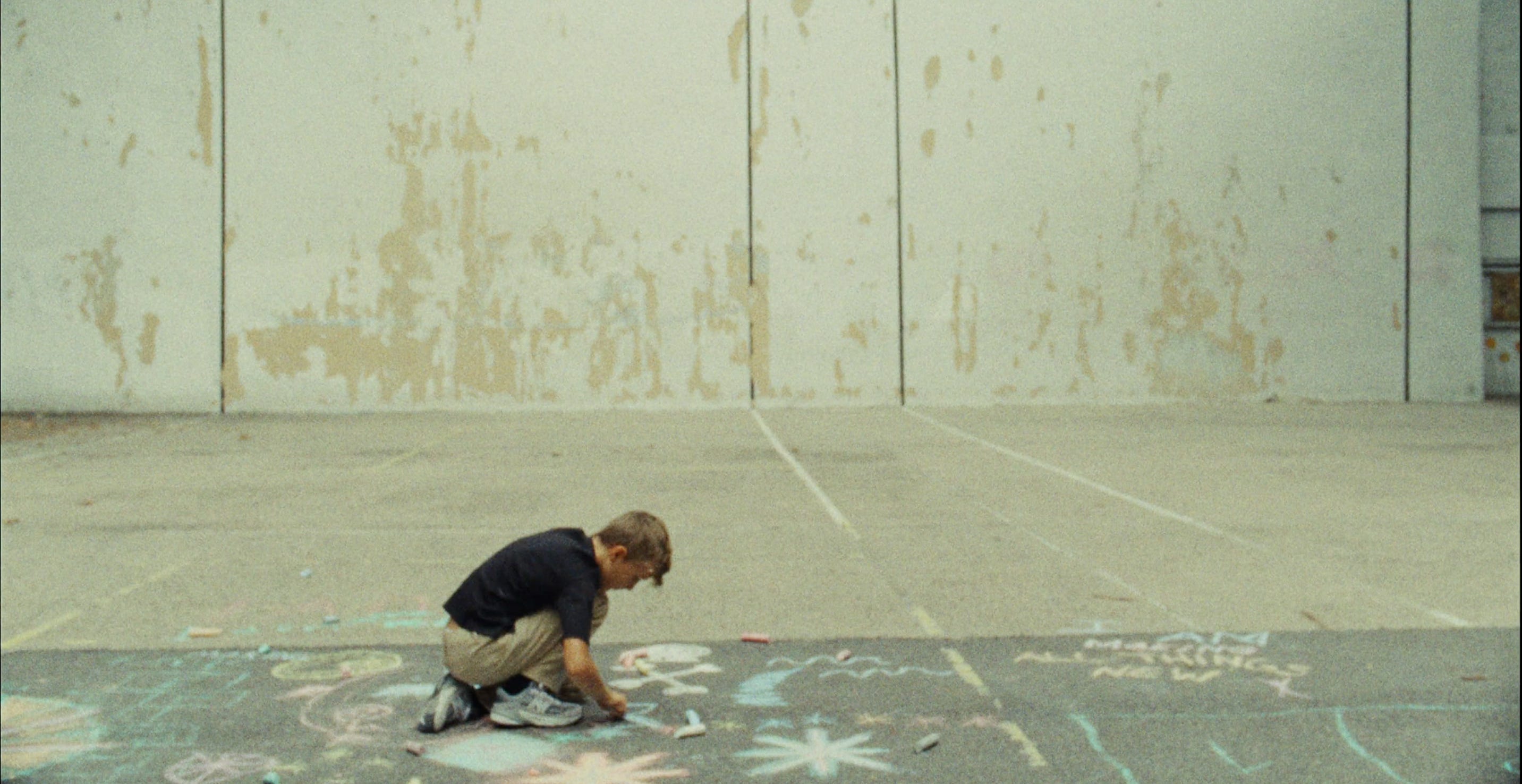
I was thinking about this in the context of Eden being our childhood—our collective human childhood. In Eden, the fall is basically the first fantasy: You can have everything, but it will cost you nothing. I want to return to play. I want to return to the piece that says, can we laugh? Like, “Son of man, can these bones live?”—which is this epic, prophetic image. Can we laugh like we once did when we were children?
As an adult, my body feels like the valley, so just to give myself a way to joy, to get into laughter, that’s a very simple return. And the rabbinic understanding of Eden being the coming-of-age story of leaving the Garden to discover what we can’t understand in that place of complete innocence and lack of experience. It’s not an inherently bad thing. It’s like, okay, this has happened. So what does it look like to now live in a place of play, knowing the world isn’t as simple as I once thought it was going to be?
It’s practice. Just practice play. On our team, there’s six people who are in prison every week, and we pay our team half a day every week—we call it Selah, as in the Psalms—and the only thing that you’re expected to do in that time is play.
You have to define three ways that you play every day—three things that just bring you life, that take you outside of the seriousness of yourself or the overthinking of yourself. Then three things that you do every week. I started going back to jiu-jitsu this year. I’m really bad at it, but it gives me this moment of self-forgetfulness in play. Then three things every month, and then one thing every year. So you have these ten lifelines. We’re spending a lot of our time in a place where you cannot deny the reality of suffering. You can’t deny how incredibly corrupt it’s become, but what sustains you is your playing, your imagination, and your desire for self-forgetfulness.
Poetry comes naturally to kids. Did you think of yourself as a poet growing up?
I wrote a poem when I was eight, and I remember my parents making a big deal. But I can’t tell you why I wrote it. But that was a moment of, oh, I noticed that I was able to record something that felt like breathing to me. It felt so natural to me, but it suddenly had this splash—it affected people. That was definitely a defining moment: oh, that mattered.
And my parents say that I walked around mumbling constantly. I was just constantly mumbling, and I just took in the world. I write poetry as an orator, so I write aloud. I record it in my mind a lot. I’ve done that since I was a child. And that’s enabled me to live in this place of the word becoming flesh—it’s just constant. I love the sound of words.
We used to live in Pakistan, we were missionaries, and so we would have these crazy long drives, hours from our remote village to town. It was constantly listening to music, and my dad had so many great storytellers: Don Francisco, Tom Petty, Tracy Chapman, Paul Simon, Cat Stevens. My childhood imagination was just flooded with stories.
What do you say to people who think poetry is inaccessible?
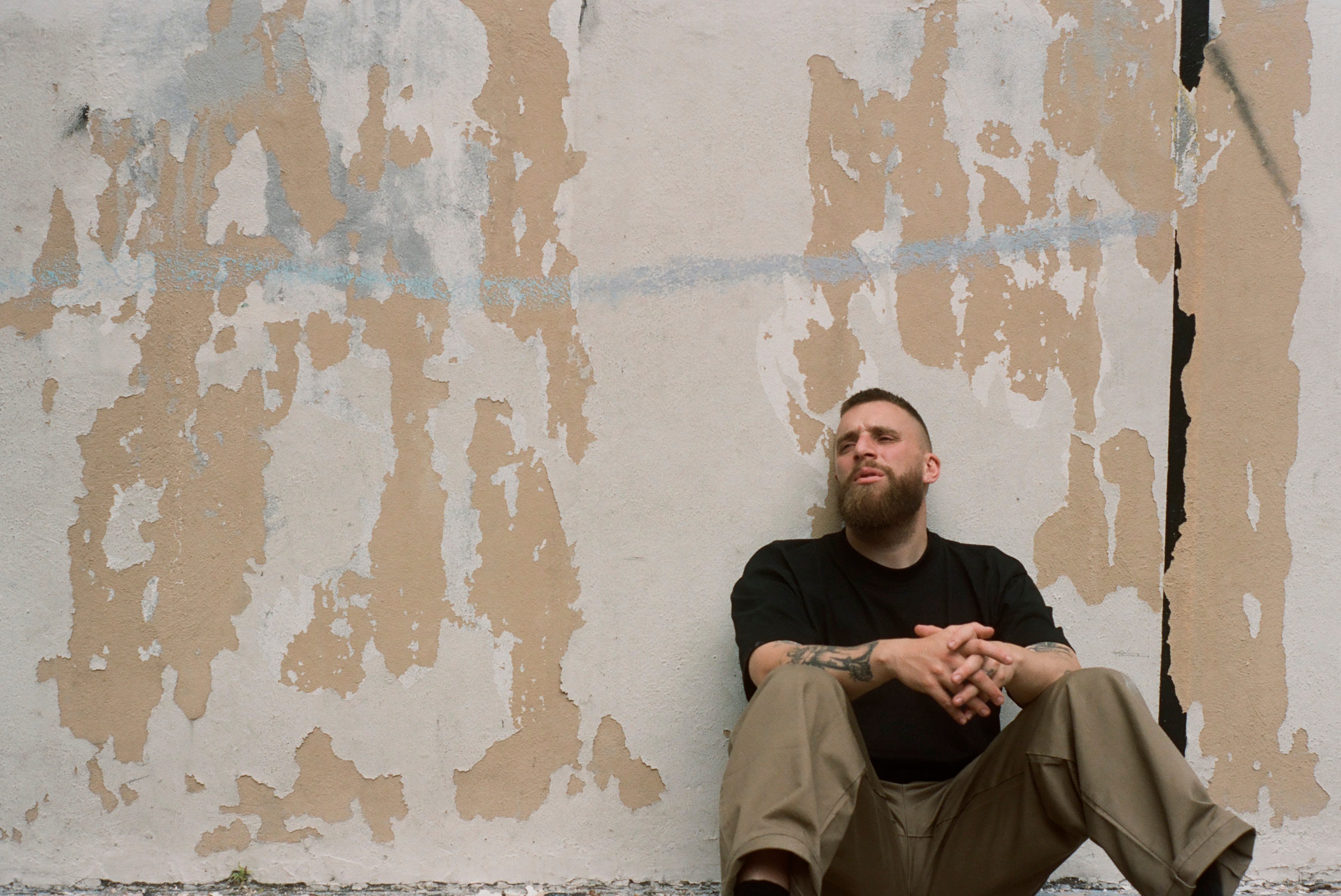
Oh yeah, I so relate. I wasn’t reading Emily Dickinson; I was listening to hip-hop. I found the written page a little bit later on. Poetry makes sense of the most sincere human complexities. And if you’re reading a poem that isn’t doing that for you, it’s okay to say, I don’t think that poem was written with me in mind. There’s a simplicity to poetry, which I think has to be maintained.
Here’s my litmus test for, is it a good poem? [Barbara Brown Taylor]—she heard Frederick Buechner give his lectures on the art of preaching—and she went up to him at the end and said, “Mr. Buechner, your words have rearranged the air.” And that’s what I’m looking for in poetry, whether it’s said aloud or written. The poem, at least briefly, is an end in itself. The poem has just rearranged something. I couldn’t articulate exactly what’s happening, but something between us is being rearranged. The words have moved the molecules in the air.
What is the relationship between grief and creativity?
I love this idea that tears are the waters breaking. There is something that is yearning to be born, and somehow grief opens that up. Times in my life where I’ve experienced grief, I’ve just never felt more alive. This poem I said yesterday, “What We Fear Most May Happen,” that came out of the worst scenario happening in my life. Well, how then do we live? And if I haven’t avoided it, if I haven’t run from it, if I haven’t numbed myself, then I have given way to something new to be born.
When my friend died, that was the beginning of the most sincere relationship I’ve ever had with God. I see him now—knowing who God is, knowing what the Cross means, knowing what community and church are about, knowing intimacy with my wife—in a way I just never would have without grief. And I wonder if that is a part of the new creation vision. We will arrive at this new creation collectively, as those who grieve together, and we’ll see a creation that has been born in the wake of our sorrow, in the wake of our grief, and potentially because of it. Irrigate the wastelands with our tears.
What place do poetry and storytelling have in the life of the church?
The first thing that comes to mind is: Tell the truth. I’ve been considering recently the truth of Christ’s woundedness. I want to create work that pulls us into this place of union and companionship and beholding of Christ, that we would then view the world through his wounds and see a view that’s simply impossible to see outside of it.
Our language is at times irreverent. Our language is unsanitized. Our language is born out of our own splinters, and that isn’t always understood by a church in the context of a Sunday morning. But it leads us, I think, closer to that place of dwelling with him in his wounds—suffering with him. Walter Brueggemann talked about the Cross being the most profound prophetic act, because rather than a prophetic word into a place from a distance, it was a prophetic word given in the midst of its depiction of what was wrong. And as a writer, I’m looking for that. I’m looking for how I can name something in a way which is born from the truth of my own life.
How did your poetry lead you into prison ministry?
A beautiful older woman in my church, whose son was in prison, invited me to go in with her one Sunday and share a poem. So I went in, I shared a poem, and it was almost like I realized I’d been waiting for this environment to share. The men just deeply resonated. So I went back the next week, and at some point the thought just occurred to me: The psalms were written for this place, because the psalms could have been written in this place.
I went in with just that idea—let’s write psalms in prison—and what I found was this beautiful potency. My work in prison is both around the craft and artistry of poetry and the prayerful, therapeutic expression of it. We begin every session talking about these four Cs of why we write. We write because it creates clarity. It helps evolve our character. It’s a creative expression—I always quote Maya Angelou: “There is no greater agony than bearing an untold story inside you.” But the fourth thing is, we write because it’s a communal offering. And you’d be surprised by how people in prison just want a way that they can give back.
People don’t go into prisons very often, and a ton of people who are imprisoned don’t get visitors. When you bring poetry into a place like that, what does art actually have to offer?
There’s a question to me: What happens when you take your art to its pastoral extreme? What does it actually have to offer? And I guess, in part, I feel like I’m coming back to say it works. Makoto Fujimura has this phrase—I wrote to him once with this kind of, “Oh, it’s so hard,” and he emailed me and said, “Yes, because you’re called to create impossible rainbows.” Go into the darkness, and where there is no glimmer, bring the glimmer and see that hue begin to form.
In prison, everything’s concentrated. The pain is concentrated, but the hope is concentrated as well. On the outside, everything’s diluted, so we don’t feel compelled by either anymore. Every time I leave prison, I feel sad and I feel hopeful. It feels like I have had the honor of touching Christ’s wounds, and I feel sad. But in touching his wounds, you feel this electricity of hope.
I’ve seen forgiveness in prison. We had this moment where we were talking about the love of God, and I said, every morning God looks at you and says, “Good morning, beloved.” And I came back the next week, and they had all been saying it on the wing when they started their morning: “Good morning, beloved”—in prison. Everything that they needed to hear when they were little boys, they’re saying to each other in prison. That’s concentrated hope.
At Praxis, we talk about “prophet-market fit,” saying something different enough to push culture forward, but not so far that nobody buys it. Redemptive entrepreneurs and creatives can face similar tensions between chasing growth and growing the right way. What has helped you think about your reach?
This is a bit corny, but it’s just helped me. Years ago, I felt him say: Son, you worry about depth. I will worry about breadth. Your only job is depth—your abiding, your community. Your artistic integrity, your craft. It’s probably always easier for me to be aware of the rejections or the invitations that didn’t happen, but I do see opportunities that I could never have dreamt of having. And I cannot give you any kind of sequence between what I’ve done and how that’s happened, and I receive that as the Lord taking care of his part.
Actually, the first time I came to the States to do something, on the plane I was writing in my journal, and I just felt him say, I’m opening up doors for you that are rooms for other people. So never mistake: If you have a door that’s open, there is someone else that you’re gonna be bringing into that room. I believe in the poetic collective—these arts movements, the Harlem Renaissance, the Beat Generation, the Inklings. I’m hungry for the way the collective rises together.
Is there a Bible story that you think deserves more attention than it gets?
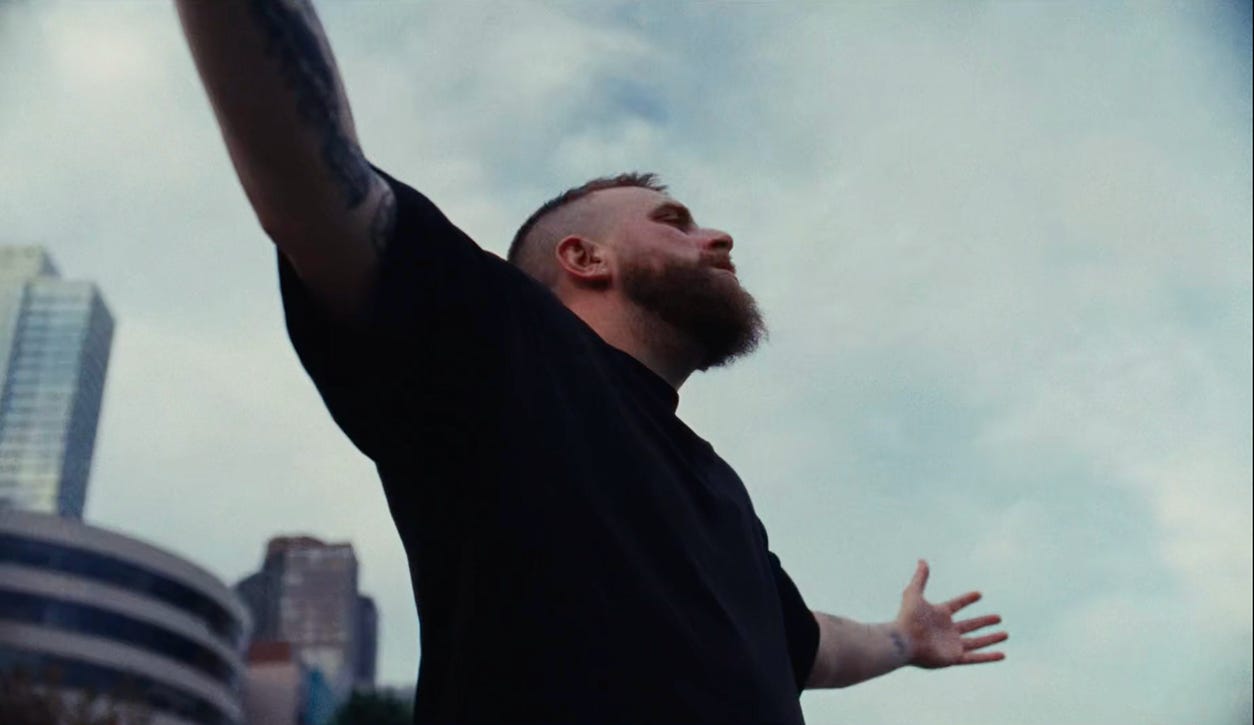
I’ve been doing some thinking around John the Baptist as the archetype of the artist—the redeemed artist. John knew Jesus in the womb. And then John chose to live the life of a thespian. He chose to live as a performance artist, like all the prophets that had gone before him. He didn’t need to wear camel cloth or eat locusts. That was him choosing to follow the way of the prophet. And I just think that comes upon some of us: Are you willing to live an obscure life?
He was obscure, and he had made peace with his obscurity. There was a time for John when he was standing by the Jordan on his own, speaking to the water, speaking to the ripples. And then, if you think about it, he was obsessed. And that’s a dirty word in the church, I think. You can’t create something that is as compelling as a piece of art like that without a level of obsession. And again, what keeps you by the Jordan when everyone is in the city? It’s an obsession with, I’m here to do this one thing. And then finally—you’re seeing the preacher in me coming out here with these three Os—he was obedient. Christ came, and he just surrendered.
And that is it for the artist. You give your whole life to glorify him in this obscure, obsessive way, that one day you’d hear his voice. When I write, I feel his smile. And that will sustain me.


Taking this thought into my writing and shepherding work:
When "pain is concentrated...hope is concentrated as well."
Beautiful. Thank you.
Inspired! Thank you for your obedience @Joshua Luke Smith.